Feeding pond fish should be simple: provide an appropriate diet, give only as much food as the fish need and adjust feeding to water temperature, fish activity and the condition of the pond.
Problems usually begin when feeding becomes automatic. Fish may continue to approach the surface and appear hungry even when they do not need another large meal, while uneaten food and the additional waste produced by overfeeding place an unnecessary load on the pond.
Goldfish and koi are omnivorous fish and will also find natural food in an established pond. Commercial pond food is therefore best viewed as a controlled way of providing balanced nutrition rather than something that should simply be added in unlimited quantities whenever the fish approach you.
Feed pond fish a complete food suitable for the species and the current water temperature. Give small portions that are eaten promptly and reduce feeding if food is being left behind.
Water temperature matters more than the month of the year. Fish normally eat more when conditions are warm and they are active, much less as the water cools, and may require no supplementary food during very cold winter conditions.
What do pond fish eat naturally?
An established garden pond is not an empty container. It develops its own small food web and fish may spend much of the day searching for food even when their keeper is not feeding them.
Depending on the pond and fish species, natural foods can include:
- aquatic insect larvae;
- small crustaceans and other aquatic invertebrates;
- worms and other small organisms;
- algae and biofilm;
- soft plant material;
- seeds and other organic material;
- insects that land on the water surface.
Goldfish and koi are opportunistic omnivores, which is one reason why they can spend so much time browsing around plants, the pond bottom and submerged surfaces.
The amount of natural food available varies enormously between ponds. A mature, lightly stocked planted pond may provide much more natural food than a recently built pond with a high fish population.
Do you need to feed pond fish?
Not every pond requires the same amount of supplementary feeding.
In a mature, lightly stocked pond with abundant natural food, healthy fish may obtain a considerable part of their diet by foraging. In a more intensively stocked ornamental pond, particularly one containing growing koi, supplementary feeding is normally used to provide predictable nutrition.
The important point is that feeding should match the pond rather than becoming a fixed ritual.
Lightly stocked natural pond
Mature ponds with relatively few fish, plants and abundant natural organisms may provide a significant amount of food by themselves.
Heavily stocked ornamental pond
More fish and faster growth normally mean greater reliance on a complete commercial diet, together with adequate filtration and maintenance.
What should you feed pond fish?
For regular feeding, the simplest option is a good-quality complete pond-fish food intended for the species you keep.
A complete diet is formulated to provide protein, fats, carbohydrates, vitamins and minerals in appropriate proportions. This makes it more suitable as the main diet than relying on miscellaneous household foods or one favourite treat.
Choose a pellet, stick or other food size that the fish can eat easily. Small fish should not have to struggle with oversized pellets, while very small food may be inefficient when feeding large koi.
Floating or sinking pond fish food?
Both can have a place in pond keeping.
Floating food is particularly useful for goldfish and koi because you can watch the fish feed. This makes it easier to judge how much they are eating and to notice changes in behaviour, body condition, skin or fins.
Sinking food is useful for bottom-feeding species and for fish that are reluctant to feed at the surface.
Some specialised pond species need a diet different from ordinary goldfish and koi food. Sturgeon, for example, should receive an appropriate sinking sturgeon diet rather than being expected to survive on leftovers from surface feeding. See our guide to keeping sturgeon in a garden pond.
How much should you feed pond fish?
There is no useful universal handful, scoop or number of pellets that applies to every pond.
The correct quantity depends on the number and size of the fish, species, water temperature, activity, natural food availability and the energy content of the feed.
For ordinary garden pond feeding, start with a small portion and watch the fish. The food should be eaten promptly rather than remaining on the surface or sinking around the pond.
If food is repeatedly left uneaten, reduce the next feed. Removing obvious uneaten food is preferable to allowing it to decay in the pond.
The aim is not to discover the maximum quantity that the fish are physically capable of swallowing. Feed enough to maintain healthy fish without creating unnecessary waste.
Why overfeeding pond fish is a problem
The problem with excessive feeding extends beyond overweight fish.
Food that enters the pond eventually becomes part of the biological load. Uneaten food decomposes, while food that is eaten later becomes fish waste. Both increase the amount of material that the filtration system and pond ecosystem must process.
Heavy feeding can therefore contribute to:
- increased ammonia production;
- higher demand on the biological filter;
- greater accumulation of solid waste;
- increased nutrient levels;
- poorer water clarity;
- greater oxygen demand;
- more frequent filter maintenance.
If water quality deteriorates as feeding increases, reducing the food input is one of the first management changes to consider.
See also our guide to fish pond water quality.
How often should pond fish be fed?
Feeding frequency changes with temperature, fish size, diet and your goals. There is no reason to use exactly the same routine throughout the year.
During suitable warm conditions, active fish can be offered several small meals rather than one unnecessarily large feed. Smaller portions also make it easier to observe consumption and stop before food is wasted.
As water cools and fish activity decreases, feeding frequency and quantity should also decrease.
Always take account of the instructions supplied with the food, particularly where a product is designed for a specific temperature range.
Water temperature and pond fish feeding
Water temperature is one of the most useful indicators when deciding how much to feed.
Goldfish and koi are ectothermic animals. Their body temperature and metabolic activity are strongly influenced by the temperature of the surrounding water. As the water cools, activity and food consumption generally decline. As conditions warm, the fish normally become more active and their food demand increases.
This is why the pond thermometer is more useful than the calendar.
Feeding pond fish in spring
Do not begin heavy spring feeding simply because the first warm afternoon has arrived.
Pond water can warm and cool repeatedly during early spring. Measure the water temperature and observe the fish themselves. Once they are consistently active and accepting food, begin with small amounts of a suitable pond diet.
There is no universal rule that every goldfish or koi pond must begin feeding at exactly 55°F or 12.8°C. Different feeds are designed for different temperature ranges, so follow the instructions for the food you are using and adjust according to fish activity.
Spring is also a useful time to observe the fish closely after winter. Reduced appetite, isolation, abnormal swimming, rapid breathing or visible skin and fin problems should not simply be blamed on the season.
Feeding pond fish during summer
Fish generally become much more active as water temperatures rise, and summer may be the period of highest food consumption and growth.
This does not mean that unlimited feeding is safe. The pond's biological filter, oxygen supply and water quality still have to cope with the additional waste created by the food.
During normal warm conditions, divide the daily food into sensible small meals where practical rather than delivering one large quantity.
Should you feed during very hot weather?
Use more caution during extreme heat.
Warm water holds less dissolved oxygen, while fish, microorganisms and decomposing organic material continue to consume oxygen. Very warm conditions can therefore reduce the pond's safety margin at the same time that biological activity is high.
If fish are stressed, gasping, unusually inactive or water temperature is extreme, investigate oxygenation and water quality rather than trying to tempt them with additional food.
See our guide to pond aeration and aerators for more information.
Feeding pond fish in autumn
As autumn water temperatures fall, gradually reduce both the amount and frequency of food.
The change should follow the water rather than a particular date. A mild autumn may keep fish active much longer than an unusually cold one.
Use food intended for the temperature conditions in which you are feeding and stop offering normal meals once the fish are no longer actively feeding.
Should you feed pond fish in winter?
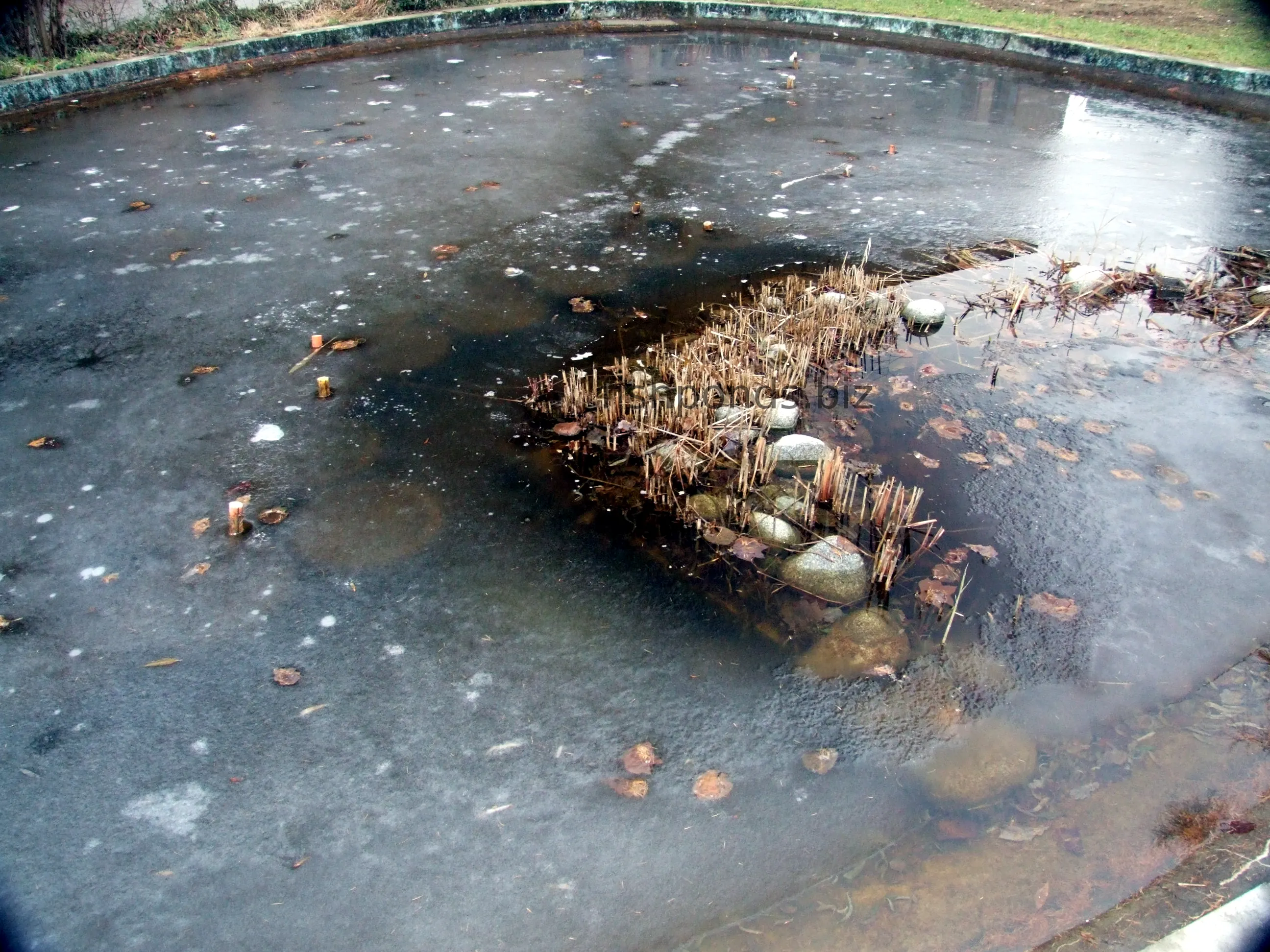
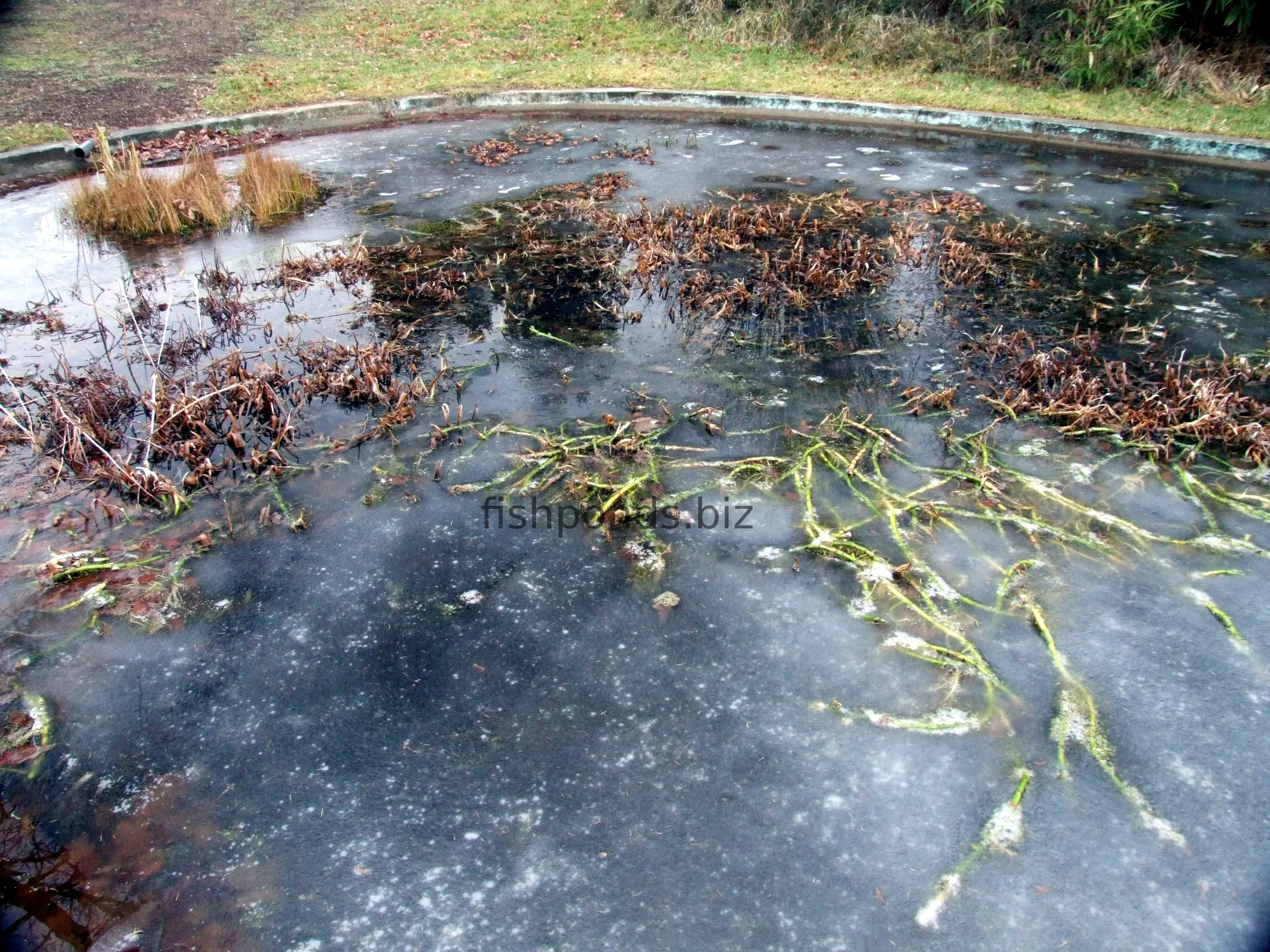
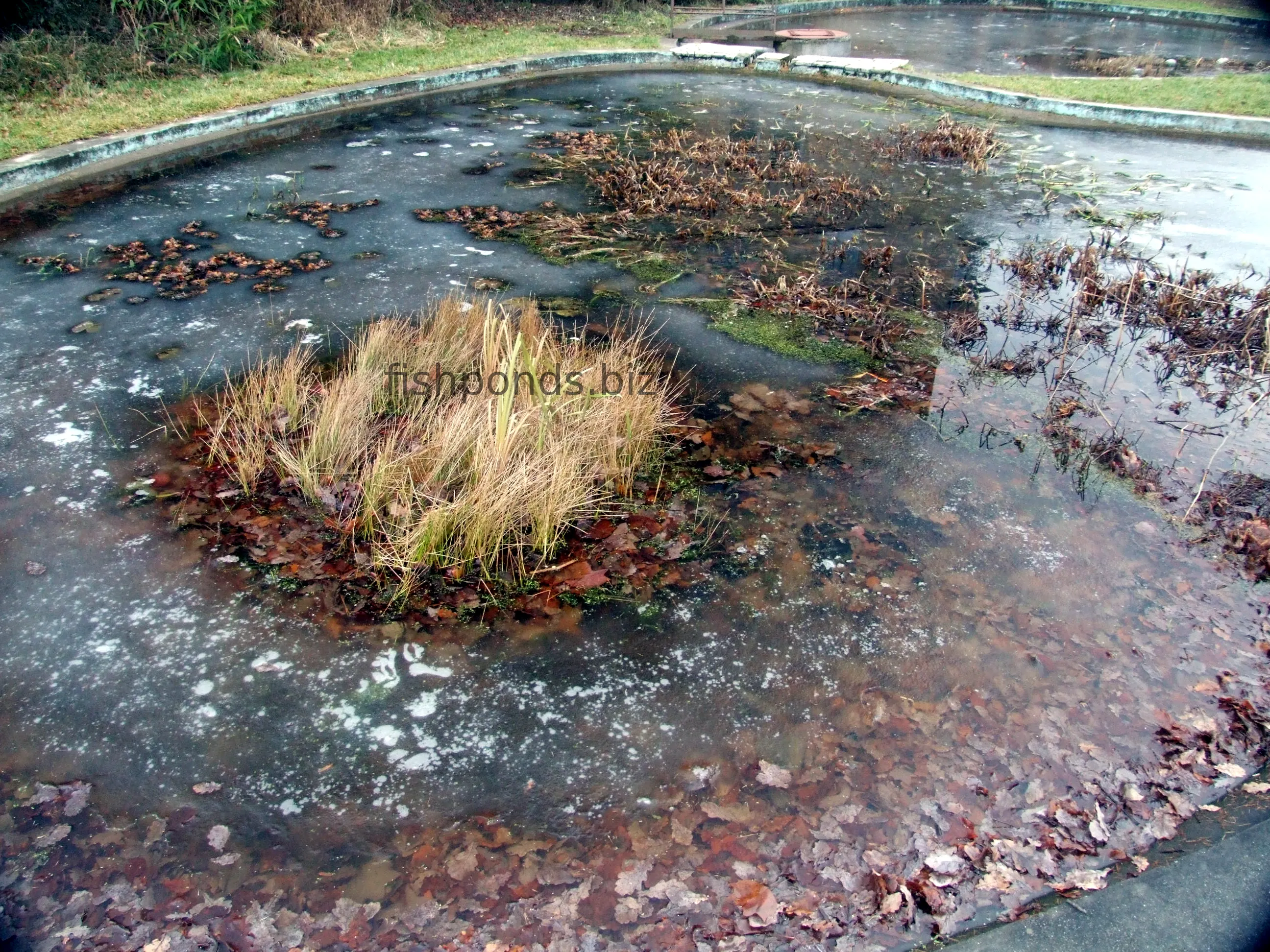
In very cold water, goldfish and koi become much less active and their food requirements fall sharply.
At approximately 45°F / 7°C and below, normal supplementary feeding should generally cease. Do not continue adding food to an inactive pond simply because the fish occasionally move or approach the surface.
Different commercial feeds specify different usable temperature ranges, so their instructions should also be followed.
Pond fish do not literally hibernate in the mammalian sense. They remain alive and responsive, but their metabolism and activity can become very low during cold conditions.
"It is October" and "it is April" tell you less about the fish than the actual water temperature and their behaviour.
What is wheat-germ pond food?
Wheat-germ foods have traditionally been promoted for cooler-water feeding and are widely available as seasonal pond diets.
There is no need, however, to assume that every pond fish must automatically be switched to wheat germ at one particular temperature. What matters is that the food is nutritionally appropriate and intended for the conditions in which it is being used.
Follow the temperature guidance supplied by the manufacturer rather than treating the words "wheat germ" as a universal feeding rule.
Do koi and goldfish eat the same food?
Koi and goldfish are both omnivorous members of the carp family, and many quality pond foods are suitable for both.
The best choice nevertheless depends on fish size, growth goals and the particular diet. Koi foods may be formulated with growth, body development or colour in mind, while general pond or goldfish diets may target a broader maintenance role.
Pellet size also matters. A nutritionally appropriate food is not particularly useful if the fish cannot comfortably eat it.
Do pond fish need high-protein food?
Protein is essential, particularly for growth, but the percentage printed on the packet should not be viewed in isolation.
A fish diet also has to supply appropriate fats, carbohydrates, vitamins, minerals and usable energy. A deliberately unbalanced feed should not be chosen simply because it has an impressive protein percentage.
Use a complete food intended for the species and conditions rather than trying to maximise one nutrient.
Can you feed trout pellets to koi or goldfish?
A feed designed for another production species is not automatically an ideal long-term diet for ornamental pond fish.
Rather than choosing trout or other aquaculture feed purely because it is inexpensive or high in protein, use a complete diet formulated for the pond fish you actually keep.
Can pond fish eat vegetables and other foods?
Goldfish and koi can eat a variety of plant and animal material, but treats should remain secondary to a balanced main diet.
Do not turn the pond into a disposal route for kitchen scraps. Foods that are unsuitable, heavily processed, seasoned or likely to break apart and foul the water should not be added simply because the fish appear willing to eat them.
For a detailed guide to temporary alternative foods for pond goldfish, see what to feed pond goldfish when you run out of fish food.
What if you run out of pond fish food?
There is normally no need to panic.
Healthy adult pond fish in a mature pond do not need to be given a substitute meal immediately simply because the food container became empty. They continue to forage naturally, and missing a short period of supplementary feeding is usually preferable to experimenting with unsuitable household food.
Replace the normal diet when practical. If you specifically keep goldfish and need temporary alternatives, our pond goldfish feeding guide covers that subject in more detail.
Do fish know when to stop eating?
Do not use apparent enthusiasm for food as an accurate measure of nutritional need.
Goldfish and koi can quickly learn that people approaching the pond often mean food. They may gather at the feeding area and behave as though they have not eaten for weeks even when they have already received an adequate ration.
The keeper, not the fish's begging behaviour, should control portion size.
Why have my pond fish stopped eating?
Reduced appetite can be completely normal when water temperature falls, but temperature is not the only possible explanation.
Fish may also stop feeding because of:
- very high water temperature;
- low dissolved oxygen;
- poor water quality;
- ammonia or nitrite problems;
- stress after transport or handling;
- disease or parasites;
- a sudden environmental change.
If a group of normally active fish suddenly refuses food under otherwise normal temperature conditions, check the pond rather than simply trying several more types of food.
Should you feed newly introduced pond fish?
Newly transported fish may need time to settle before feeding normally.
Do not compensate for transport stress with a large meal. Once the fish are settled, swimming normally and showing normal interest in food, begin with a modest portion and observe them.
In a newly stocked pond, also monitor ammonia and nitrite because an increase in feeding means an increase in the biological load placed on the filter.
See our guide to stocking a fish pond.
How feeding affects pond filtration
The amount of food added to a pond is closely connected to the amount of waste the system must process.
A pond containing the same number of fish can impose very different loads on its filter depending on how heavily those fish are fed.
Heavy feeding for rapid growth requires correspondingly capable filtration, aeration and maintenance. A lightly fed ornamental population places a smaller load on the same system.
For more information, see our guide to fish pond filtration.
How to feed pond fish in practice
- Check the water temperature. Adjust feeding to current conditions rather than the calendar.
- Observe the fish before feeding. Healthy active fish should normally show appropriate interest in food.
- Offer a small portion. Do not begin with a large handful.
- Watch them eat. Floating food is particularly useful for observing appetite and body condition.
- Add more only if appropriate. Several controlled small portions are easier to judge than one large feed.
- Stop before food is being wasted. Remove obvious leftovers rather than leaving them to decay.
- Adjust the next feed. Feeding is an ongoing observation process, not a fixed scoop used every day of the year.
Common pond fish feeding mistakes
- Feeding the same amount all year. Fish activity and food requirements change considerably with water temperature.
- Feeding because the fish look hungry. Pond fish readily learn to associate people with food.
- Leaving uneaten food in the pond. The food does not disappear; it becomes part of the pond's waste load.
- Trying to maximise growth in an already heavily stocked pond. More food means more biological load.
- Using the calendar instead of a thermometer. Water conditions can vary greatly from one spring or autumn to another.
- Assuming one temperature rule applies to every food. Use the temperature range specified for the particular diet.
- Choosing food only by protein percentage. A complete balanced formulation matters more than one impressive number on the label.
- Using random household foods as the main diet. Treats and emergency substitutes should not replace appropriate complete pond food.
- Trying to feed fish that have suddenly stopped eating. Unexpected loss of appetite can indicate an environmental or health problem that needs investigation.
- Continuing heavy feeding during oxygen stress or extreme heat. Correct the underlying pond conditions first.
How feeding fits into long-term pond care
Good feeding is part of water-quality management.
The ideal routine provides enough nutrition for healthy fish without forcing the filter and pond ecosystem to process unnecessary food and waste.
Watch the fish, measure the water temperature, monitor water quality and change the feeding regime as conditions change.
Useful related guides include pond water quality, fish pond filters, pond aeration, pond stocking and fish pond maintenance.
Pond fish feeding FAQs
What should I feed pond fish?
Use a complete pond-fish food suitable for the species, fish size and current water temperature. Natural food in the pond can supplement the diet.
What do pond fish eat naturally?
Depending on the pond, fish may browse on algae, biofilm, aquatic invertebrates, insect larvae, worms, plant material and insects that reach the water.
How much should I feed pond fish?
Give controlled small portions and stop before food is being left uneaten. The correct amount depends on fish size, number, activity, temperature and the food being used.
How often should pond fish be fed?
Feeding frequency depends mainly on water temperature, fish activity and the diet. Active fish in suitable warm conditions can receive several small meals, while feeding should decrease considerably as the water cools.
Do pond fish need feeding every day?
Not necessarily. A lightly stocked mature pond can supply a considerable amount of natural food. Feeding also changes with season and water temperature.
Should I feed pond fish during winter?
During very cold conditions normal supplementary feeding should stop. At around 45°F / 7°C and below, goldfish and koi normally have very low feeding activity.
When should I start feeding pond fish in spring?
Use the water temperature, fish behaviour and the temperature range specified for your food rather than starting on a fixed calendar date.
Can I overfeed pond fish?
Yes. Excess feeding increases waste and can contribute to poor water quality, higher ammonia load and greater demand on filtration and oxygen.
Do koi and goldfish eat the same food?
Many complete pond foods can be used for both because koi and goldfish are omnivorous members of the carp family. Choose a diet and pellet size appropriate for the fish you keep.
What can I feed fish if I have no fish food?
Healthy adult pond fish usually do not need an improvised meal immediately. A short break from supplementary feeding is often preferable to adding unsuitable food. Goldfish alternatives are covered in our dedicated emergency feeding guide.
Why are my pond fish not eating?
Cold water commonly reduces appetite, but unusually low appetite can also result from excessive heat, low oxygen, poor water quality, stress or disease.
Do fish know when to stop eating?
Do not rely on begging behaviour to determine portion size. Goldfish and koi quickly learn to associate people with food and may continue asking for it after an adequate feed.