Stocking a new fish pond is one of the most enjoyable stages of pond keeping, but it is also one of the easiest places to create problems that may not become obvious until weeks or months later.
The aim is not to fit the largest possible number of fish into the available water. A well-stocked pond has enough biological filtration, oxygen and swimming space for its fish at their adult size while still leaving a reasonable margin for warm weather, growth and the occasional failure or maintenance of equipment.
The correct number of fish therefore cannot be calculated from pond volume alone. Species, adult size, filtration, aeration, feeding, temperature and maintenance all affect how much fish biomass a pond can support safely.
Do not stock a newly filled pond simply because the water looks clear. Prepare and cycle the biological filter first, confirm that the water is safe, choose fish whose adult size suits the pond and add them gradually.
Stock conservatively. It is much easier to add another fish later than to manage an overcrowded pond with persistent water-quality and oxygen problems.
What does stocking a pond mean?
Stocking simply means introducing fish to a pond and deciding which species and how many individuals the system will contain.
For a garden fish pond, good stocking involves more than buying a collection of small attractive fish. You need to consider what those fish will become as adults and whether the pond will continue to meet their needs after several years of growth and reproduction.
This guide concerns ornamental and garden fish ponds. Stocking fisheries, farm ponds and large natural ponds is a different subject involving different species, objectives and management methods.
Before stocking a new fish pond
A newly constructed pond should be treated as a new biological system rather than as a container that becomes ready for fish as soon as it contains water.
Before adding fish, check the following.
- Any chlorine or chloramine in mains water has been neutralised.
- The pump and filtration system are operating correctly.
- The biological filter has been cycled.
- Ammonia and nitrite are under control.
- The water temperature and pH are appropriate and reasonably stable.
- There is adequate circulation and oxygenation.
- The pond is suitable for the adult size of the species being considered.
Cycle the pond before adding fish
Fish continuously produce nitrogenous waste. In an established pond, nitrifying microorganisms associated particularly with the biological filter convert ammonia through nitrite into less immediately toxic nitrate.
A new filter does not begin with a fully established nitrifying population. Adding a substantial fish load before that population has developed can result in dangerous ammonia and nitrite concentrations.
For a new pond, fishless cycling allows the biological filter to establish without deliberately exposing fish to these pollutants.
For a detailed explanation of the process, see our guide to cycling a new fish pond.
Ammonia and nitrite are invisible. A newly filled pond can look perfectly clean while still being biologically unprepared for a normal fish load.
How many fish can you stock in a pond?
There is no single stocking formula that works safely for every garden pond.
Older rules often calculate stocking from gallons, litres, surface area or inches of fish. These can sometimes provide a rough comparison between similar ponds, but they should not be treated as a guarantee that a particular fish population will be safe.
The real limit is the carrying capacity of the complete pond system.
Adult size
Base the plan on how large the fish can become, not on the size of juveniles in the dealer's tank.
Filtration capacity
More and larger fish produce more waste and place a greater demand on the biological and mechanical filtration system.
Oxygen and aeration
Fish, microorganisms and decomposing organic material all require oxygen. Warm weather can make oxygen management particularly important.
Pond size and shape
Volume, surface area, depth and available swimming space all matter when deciding what fish the pond can reasonably support.
Feeding
Food entering the pond eventually contributes to the biological load. Heavy feeding increases the demand on filtration and oxygen.
Maintenance
A theoretical population is of little use if keeping it healthy requires more cleaning, testing and water management than the owner can realistically provide.
Why the old "inches of fish" rule can be misleading
Fish length does not increase in the same way as fish mass.
A 60 cm fish is not simply equivalent to two 30 cm fish. A large-bodied adult contains much more biomass, consumes more food and produces substantially more waste.
Species also have different body shapes, activity levels and environmental requirements. Treating every centimetre or inch of every species as equivalent can therefore give a false impression of precision.
Use stocking formulas, charts and online pond calculators only as rough planning tools. The pond's actual water quality and the condition of the fish remain more important than the result produced by a calculator.
Stock for the adult fish, not the juvenile
Many pond fish are sold when they are still small. This makes an apparently spacious pond very easy to overstock.
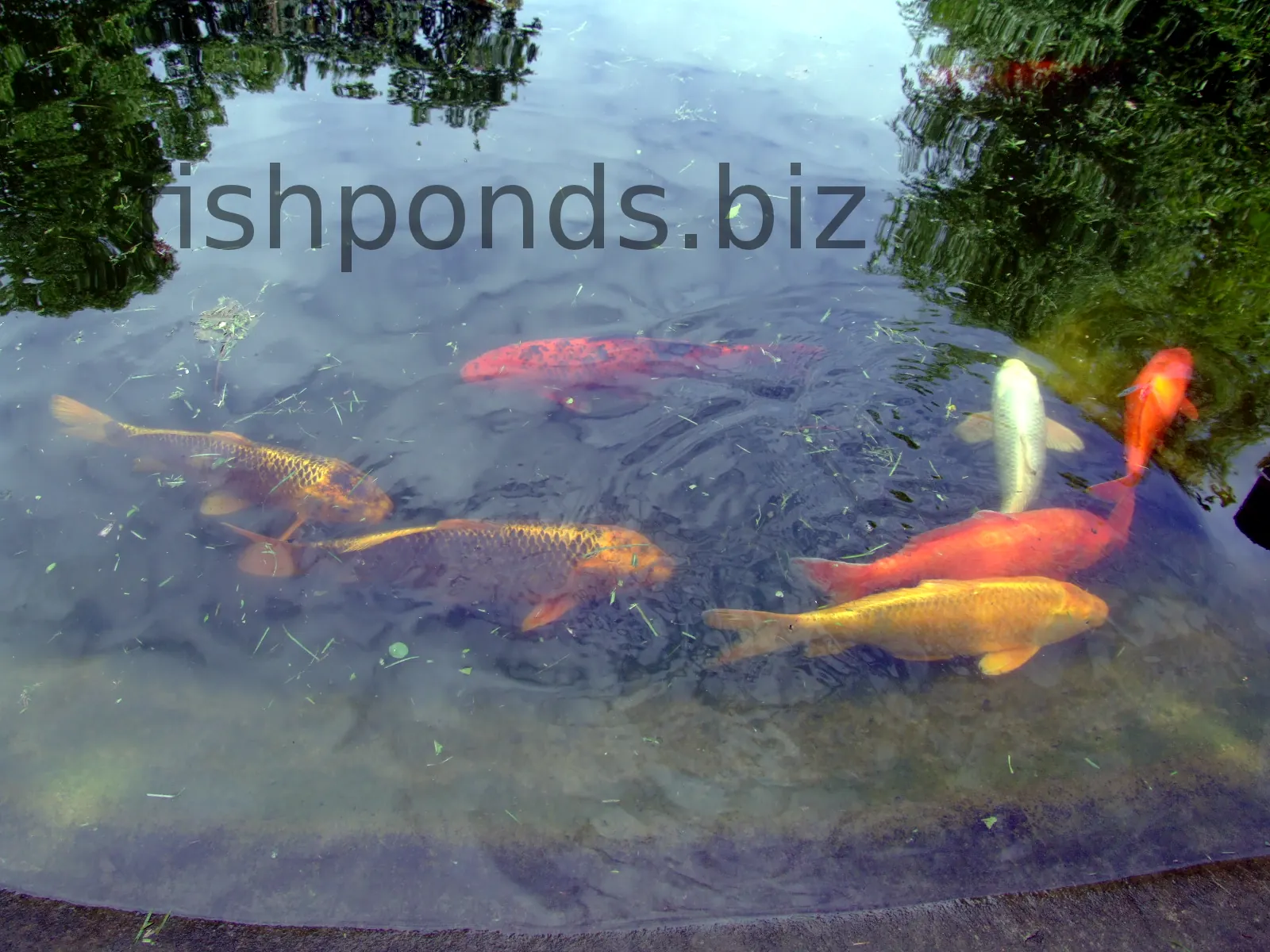
Before buying a species, find out its expected adult size and behaviour. Common-bodied goldfish such as commons, comets and shubunkins can become large pond fish, while koi can become dramatically larger and heavier.
A pond containing ten small koi may initially appear almost empty. The same ten fish several years later can represent an entirely different biological load.
Koi stocking density is not the same as goldfish stocking
Koi and goldfish are related, but they should not simply be treated as interchangeable units in a stocking calculation.
Koi can grow into very large, heavy fish and generally require substantially more swimming space and filtration capacity than common pond goldfish.
Goldfish remain smaller but can still reach substantial adult sizes, produce significant waste and reproduce successfully in outdoor ponds.
Common-bodied goldfish
Commons, comets and shubunkins are popular outdoor pond fish. Their eventual adult size and their ability to reproduce still need to be included in the stocking plan.
Koi carp
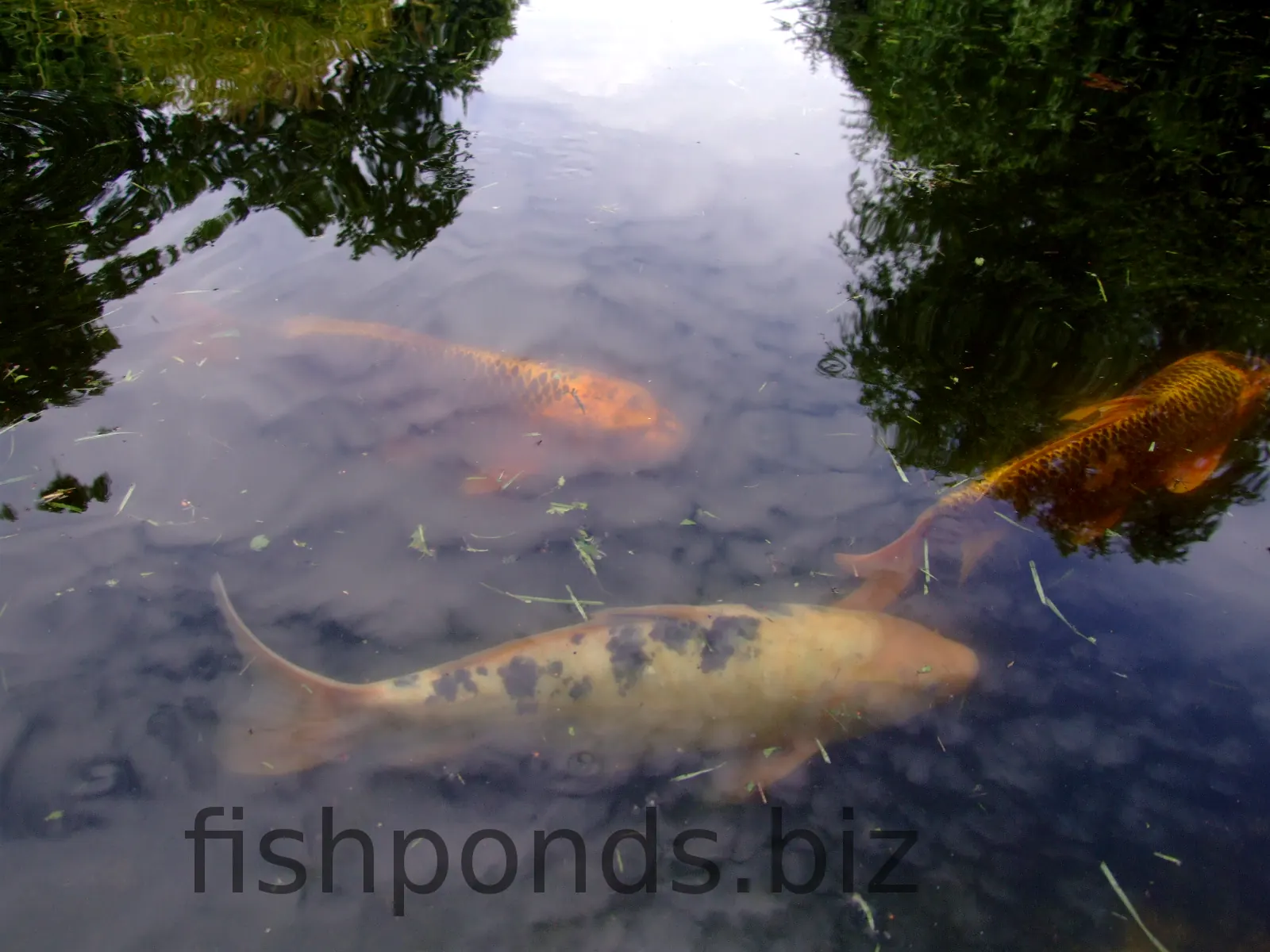
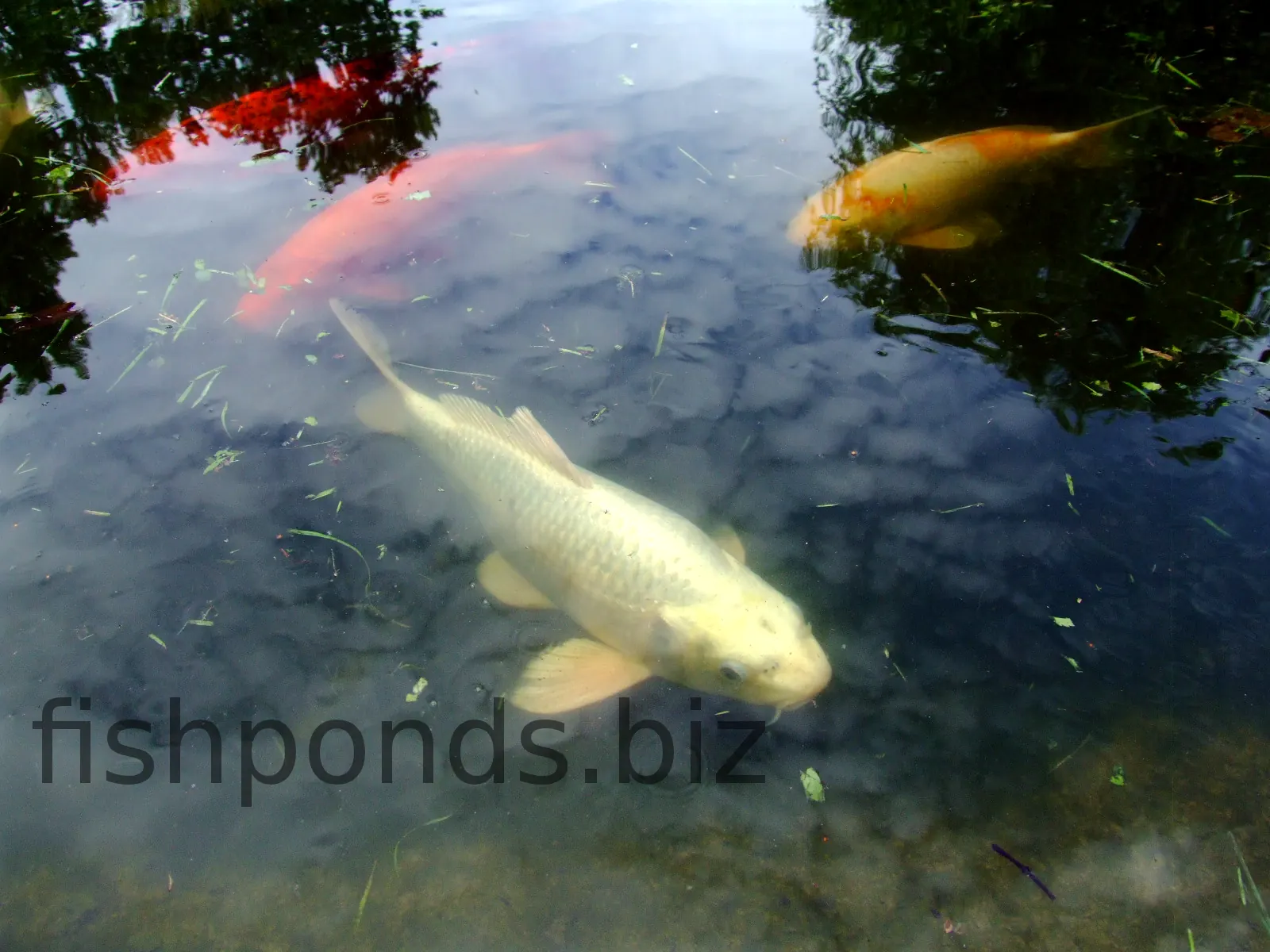
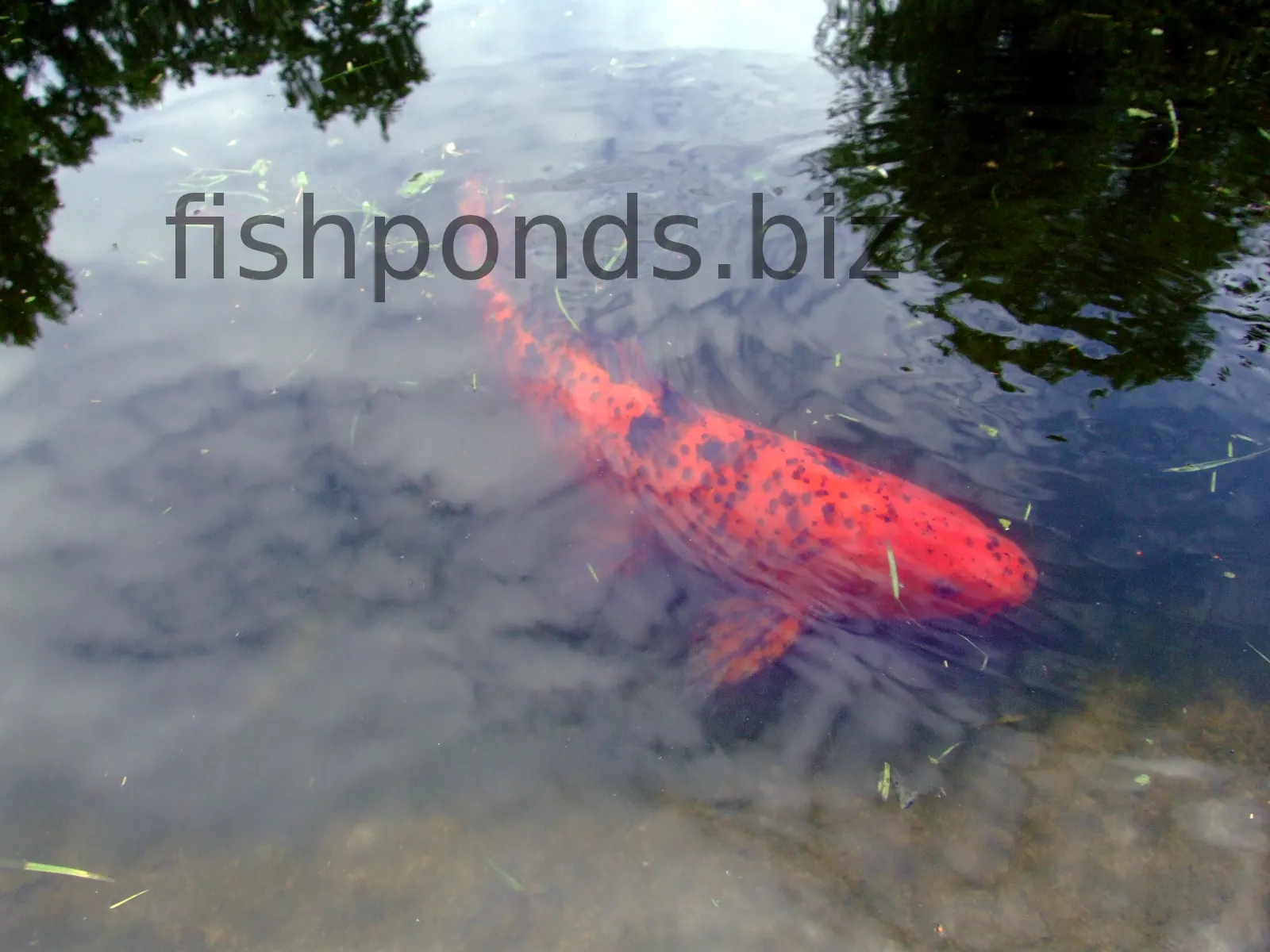
Koi become much larger and can create a heavy biological load. The pond, filtration and circulation should be designed with adult koi rather than newly purchased juveniles in mind.
How many fish should you add at first?
Even after a pond has been cycled, there is little advantage in adding the entire planned population on the same day.
Introduce a modest first group and monitor the system. Fish begin producing waste immediately, so the biological filter has to adjust from the cycling conditions to the real feeding and waste load.
Test ammonia and nitrite after stocking and watch the behaviour of the fish. Only consider another group after the pond is demonstrably coping with the fish already present.
- Plan the final population. Consider species and adult size before buying the first fish.
- Cycle the biological filter. Do not use the first fish as disposable test animals.
- Add a small initial group. Avoid suddenly imposing the entire future biological load.
- Test the water. Monitor ammonia, nitrite and other important water-quality parameters.
- Allow the system to stabilise. Do not add another group simply because the first fish survived the first few days.
- Stop before the pond reaches its limit. A safety margin is more useful than trying to maximise the theoretical number of fish.
When is the best time to stock a pond?
There is no single calendar date that makes stocking safe.
Stable moderate conditions are preferable to temperature extremes. Avoid introducing fish during unusually hot weather, cold snaps or periods when the pond is undergoing major water-quality changes.
Spring is commonly convenient because temperatures are rising and the fish have a long growing season ahead, but the biological readiness of the pond is more important than the month printed on the calendar.
A properly prepared pond in suitable stable conditions is preferable to an uncycled pond stocked simply because it happens to be spring.
Can you stock a pond during summer?
Yes, provided the pond and fish are within appropriate temperature conditions and the water is well oxygenated.
Very hot weather is a poor time to make major changes to the fish population. Warm water holds less dissolved oxygen while fish metabolism and biological activity can be high.
If conditions are extreme, wait for the pond to stabilise rather than adding another source of biological demand.
Can you stock a pond in autumn or winter?
Cold-water pond fish can live outdoors through winter when the pond and climate are suitable, but introducing new fish immediately before or during difficult winter conditions provides little advantage.
Fish should have time to settle and recover from transport under stable conditions. If temperatures are already falling sharply, postponing stocking until conditions improve is usually the more cautious approach.
How to choose healthy pond fish
Stocking begins at the dealer or breeder rather than at the edge of your pond.
Observe the fish before purchase. Healthy specimens should normally swim and respond appropriately with the rest of the group rather than remaining isolated and obviously distressed.
Look for:
- normal swimming and balance;
- intact fins and skin;
- clear eyes;
- no obvious ulcers, abnormal swellings or heavy mucus;
- no visible parasites;
- normal interest in food where feeding can be observed.
Buying healthy-looking fish cannot guarantee that they carry no pathogen, which is why quarantine is valuable when an established pond population needs to be protected.
Should new pond fish be quarantined?
Where practical, yes.
A separate quarantine system allows new fish to be observed before they share water with an established collection. This reduces the risk of introducing a disease or parasite directly into the main pond.
This becomes particularly important with valuable koi collections, fish from different sources or any established pond where an outbreak would affect many animals.
Quarantine equipment should not casually be shared with the main pond because nets, bowls and other wet equipment can transfer pathogens between systems.
How to acclimate new fish to a pond
Moving directly from transport water into pond water with a substantially different temperature or chemistry can place unnecessary stress on fish.
A simple acclimation procedure is:
- Keep the transport bag shaded. Do not leave a sealed bag heating in direct sunlight.
- Float the closed bag briefly. This helps reduce a temperature difference between the transport water and the pond.
- Adjust gradually where necessary. If the supplier recommends gradual water mixing because of differences in water chemistry, follow the appropriate acclimation procedure.
- Transfer the fish gently. Where practical, move the fish into the pond without pouring the transport water into the pond.
- Watch the fish afterwards. Newly introduced fish should be monitored for abnormal swimming, breathing, isolation or other signs of stress.
The small volume of water inside a bag can warm quickly. Temperature acclimation should be supervised rather than leaving the fish floating unattended for an arbitrary period.
Which fish are suitable for a garden pond?
The best choice depends on pond size, depth, climate, filtration and the type of pond you want to keep.
For many temperate garden ponds, common-bodied goldfish provide the simplest starting point. Koi require considerably more space and system capacity. Other cold-water species may also be suitable, but their requirements should be checked individually rather than assuming that every fish sold as a "pond fish" can live comfortably in every pond.
Common goldfish
Common goldfish are hardy, active pond fish and are available in many colours. They can become much larger than the small specimens often sold in shops and should be stocked according to their adult requirements.
They may also reproduce in a suitable pond, which means that a population that begins at an ideal level can eventually become overcrowded without any further fish being purchased.
Shubunkins
Shubunkins are single-tailed goldfish characterised by their calico colour pattern. Their active body shape makes them well suited to many outdoor ponds that are suitable for common goldfish.
As with other goldfish, allow for their adult size and possible reproduction rather than treating them as permanently small decorative fish.
Comet goldfish
Comets are another active, single-tailed form of goldfish. They are popular pond fish but require genuine swimming space and should not be confused with small aquarium fish simply because juveniles are inexpensive and widely sold.
A successful breeding season can also increase their numbers rapidly.
Koi carp
Koi are among the most impressive ornamental pond fish but they are not simply large coloured goldfish.
They can become very large, live for many years and place a substantial demand on filtration and water quality. A pond intended for koi should therefore be planned around adult koi from the beginning.
For more information, see our guide to koi carp.
Other pond fish
Depending on climate and local availability, species such as orfe, rudd and tench may also be offered for outdoor ponds.
Do not select them simply because they are displayed in the pond section of a shop. Check adult size, social behaviour, swimming-space requirements, temperature range and compatibility with the fish already present.
More specialised species such as sturgeon have additional requirements and should be researched before purchase rather than added as an impulse choice. See our guide to keeping sturgeon in a garden pond.
Small pond stocking
Small ponds give the owner much less margin for error.
Temperature, oxygen concentration and water chemistry can change more rapidly than in a large body of water, while even a few growing fish can represent a substantial biological load.
For a small pond, fewer appropriately sized fish are usually a better choice than attempting to keep several different large-growing species.
If the pond is extremely small, keeping it as a planted wildlife or ornamental pond without fish may be the better option.
How filtration affects pond stocking
A biological filter does not create unlimited stocking capacity.
Larger filters and better circulation can support a greater waste load than a poorly filtered system, but filtration does not remove the need for swimming space, oxygen, water changes and sensible feeding.
A filter also has to remain maintainable. A pond that is technically kept alive only by constant filter cleaning and emergency water management is not sensibly stocked.
See our guide to fish pond filters for more information.
How aeration affects stocking
Oxygen availability is another part of the pond's carrying capacity.
Fish consume oxygen, but so do microorganisms in the biological filter and organisms decomposing waste. The risk of oxygen shortage can increase in warm weather because warmer water holds less dissolved oxygen.
Aeration can improve the safety margin, but it should not be used as an excuse to crowd an excessive population into inadequate space.
See our guide to pond aeration and aerators.
What happens when a pond is overstocked?
Overstocking does not always produce an immediate mass mortality. More often it reduces the system's safety margin until a hot day, filter problem, power failure, heavy feeding event or disease outbreak pushes the pond beyond what it can cope with.
Possible warning signs include:
- repeated ammonia or nitrite problems;
- fish gasping or congregating where oxygen is highest;
- rapid deterioration in water quality after feeding;
- filters requiring unusually frequent cleaning;
- persistent accumulation of organic waste;
- recurrent health problems;
- little margin for equipment failure or very warm weather.
Fish breeding can overstock a pond for you
Goldfish and koi may reproduce successfully in outdoor ponds.
Most eggs and fry may not survive, but it only takes a successful breeding season or two for a previously sensible population to become much larger.
Reassess stocking every year rather than assuming that the number of fish originally purchased is still the number being supported.
What should you do with too many pond fish?
If the pond has become overcrowded, the long-term answer is normally to reduce the fish load, enlarge the system or substantially improve the environment rather than continuously treating the symptoms of overstocking.
Suitable healthy fish may be rehomed privately or through an appropriate pond or aquatic retailer where available.
Do not release unwanted ornamental fish into natural ponds, rivers, canals or other wild waters. Non-native fish can spread disease, compete with native species and create ecological problems.
How to tell whether your pond can accept more fish
- What will every fish already in the pond weigh and measure as an adult?
- Are ammonia and nitrite consistently under control?
- Is oxygenation adequate during the hottest part of the year?
- Does the biological filter have spare capacity?
- Is there still adequate swimming space?
- Are the existing fish growing and behaving normally?
- Can I maintain this population without excessive intervention?
- What happens if the fish reproduce?
If several answers are uncertain, adding another fish is probably not the next job the pond needs.
Common fish pond stocking mistakes
- Adding fish immediately after filling a new pond. Clear water does not mean that the biological filter is mature.
- Using one universal fish-per-gallon formula. Species, adult size, filtration, oxygen and feeding can make two ponds of identical volume very different systems.
- Calculating from the size of juvenile fish. Plan around the adult population.
- Adding the entire planned population at once. Gradual stocking allows the system to respond to the increasing waste load.
- Ignoring quarantine. One apparently healthy new fish can introduce a pathogen to an established collection.
- Assuming a large filter permits unlimited fish. Fish still require oxygen and physical space.
- Ignoring natural reproduction. Pond populations can increase without another visit to the fish shop.
- Stocking during extreme weather. Transport and introduction are additional stresses at exactly the time environmental conditions may already be difficult.
- Mixing species without checking their requirements. A fish being sold for outdoor ponds does not automatically make it suitable for your particular pond.
- Releasing surplus fish into the wild. Rehome unwanted ornamental fish responsibly instead.
How stocking fits into long-term pond management
Stocking is not a single event completed on the day the fish are released. Every fish grows, eats, produces waste and may reproduce.
Continue testing the water, maintain filtration, provide adequate aeration and reassess the number and size of fish as the pond matures.
Useful related guides include fish pond water quality, cycling a fish pond, pond filtration, pond aeration and fish pond maintenance.
Fish pond stocking FAQs
How many fish should I stock in my pond?
There is no universal number based only on litres or gallons. Consider adult fish size, pond dimensions, filtration, aeration, temperature, feeding and the system's demonstrated water quality.
How do you stock a pond with fish?
Cycle and test the pond first, choose suitable healthy fish, acclimate them carefully, add a small initial group and monitor water quality before considering further additions.
When is the best time to stock a pond?
Choose a period of stable, moderate water temperature rather than extreme heat or cold. The pond must also be biologically ready before fish are introduced.
Can I put fish into a newly filled pond?
Not simply because it has been filled. Mains-water disinfectants must be dealt with where present and the biological filtration should be established before a normal fish load is introduced.
Should I add all my pond fish at once?
Gradual stocking is safer. It allows the biological system to adjust to the increasing waste load and gives you time to detect water-quality problems.
How many koi can I keep in a pond?
There is no reliable universal koi-per-gallon figure. Plan for adult koi and consider the complete pond, filtration, aeration, feeding and maintenance capacity rather than the size of young koi when purchased.
Are goldfish easier to stock than koi?
Common-bodied goldfish generally require less space per adult fish than koi because koi become much larger. Goldfish can still become sizeable, produce significant waste and reproduce in the pond.
Can a small pond have fish?
Some small ponds can support an appropriately modest fish population, but small water volumes offer less stability and can be easy to overstock. Very small ponds may be better kept without fish.
Does a bigger filter mean I can keep more fish?
Better filtration can increase waste-processing capacity, but fish also require oxygen, swimming space and stable water conditions. Filtration is only one part of stocking capacity.
Do I need to quarantine new pond fish?
Quarantine is strongly worth considering when adding fish to an established population because it allows new arrivals to be observed separately before sharing water with the main pond.
What if my pond fish reproduce?
Reassess the total population as juveniles grow. Successful breeding can turn a sensibly stocked pond into an overcrowded one even when no additional fish have been purchased.
Can I release unwanted pond fish into a lake or river?
No. Rehome unwanted ornamental fish responsibly rather than releasing them into natural waters.
Reader question
In the past three or four days the fish in the garden pond have risen to the surface but they are very slow, otherwise they look rather healthy, is anything wrong with them? Thanks for your help!
If this is happening in early spring while the pond water is still cold, reduced activity can be normal. Fish metabolism slows in cold water and their activity should gradually increase as the water warms.
I would not assume that everything is fine solely from their appearance, however. Fish remaining close to the surface can also indicate a water-quality or oxygen problem, particularly if several fish are affected, they are gasping at the surface, breathing rapidly or becoming progressively more lethargic.
Check the water temperature, ammonia and nitrite, and make sure that circulation and aeration are working normally. If the water-quality results are satisfactory, the fish are not gasping or showing other abnormal signs, and their activity gradually increases as the pond warms, the behaviour is likely to be associated with the seasonal rise in temperature.