A good fish pond design begins long before the first hole is dug. Shape and appearance matter, but so do depth, fish requirements, filtration, circulation, planting, maintenance access and the way the pond fits into the surrounding garden.
The best design is therefore not simply the most attractive one. It is the design that looks appropriate in its setting while remaining practical to build, maintain and keep healthy for the fish that will live in it.
Whether you want a small goldfish pond, a natural-looking planted pond or a larger koi pond, planning the layout on paper first can prevent expensive and awkward changes later.
Start by deciding what the pond is for. Then plan its position, shape, depth zones, fish space, planting areas, filtration and maintenance access before deciding on decorative details.
A successful pond should look as though it belongs in the garden while still providing suitable conditions for its fish and equipment.
What makes a good fish pond design?
A good design balances appearance with function.
Before choosing a shape, consider:
- which fish you intend to keep;
- how large the pond can realistically be;
- the depth required for the intended use and local climate;
- where filtration and pumps will be installed;
- how water will circulate through the pond;
- where aquatic plants will grow;
- how you will reach the pond for maintenance;
- how the pond will look from the house, patio or main viewing area.
The ideal layout differs between a heavily planted ornamental pond and a koi pond designed around large fish and powerful filtration.
Decide what the pond is for first
The purpose of the pond should guide almost every later design decision.
Natural-style pond
Uses irregular shapes, softer edges and substantial planting to blend into the garden and provide habitat around the water.
Ornamental fish pond
Balances open swimming space with planting and decorative features such as rocks, fountains or waterfalls.
Koi pond
Gives greater priority to water volume, swimming space, effective filtration, circulation and easy maintenance.
Where should you place a fish pond?
Pond position affects appearance, maintenance and water conditions.
Choose a location that can be enjoyed from the parts of the garden or house that you use most often. A beautiful pond hidden behind a shed may receive far less attention than one visible from a patio or window.
At the same time, leave enough space around the pond to work safely and reach filters, plants and edges.
Consider:
- sun and shade through the day;
- nearby trees and falling leaves;
- access to electricity where required;
- the route for pipes and cables;
- surface water runoff after heavy rain;
- access for construction and later maintenance;
- how the pond will be viewed from the surrounding garden.
Avoid receiving dirty surface runoff
A pond should not be positioned or edged so that rainwater from fertilised lawns, paths, driveways or surrounding soil routinely washes directly into it.
Surface runoff can carry soil, nutrients, chemicals and other contaminants into the pond.
Where necessary, shape the surrounding ground so that unwanted runoff moves away from the pond rather than toward it.
Choosing a fish pond shape
There is no single best pond shape. The right choice depends on the style of the garden, the intended fish and how the pond will be constructed.
Rectangular and square ponds
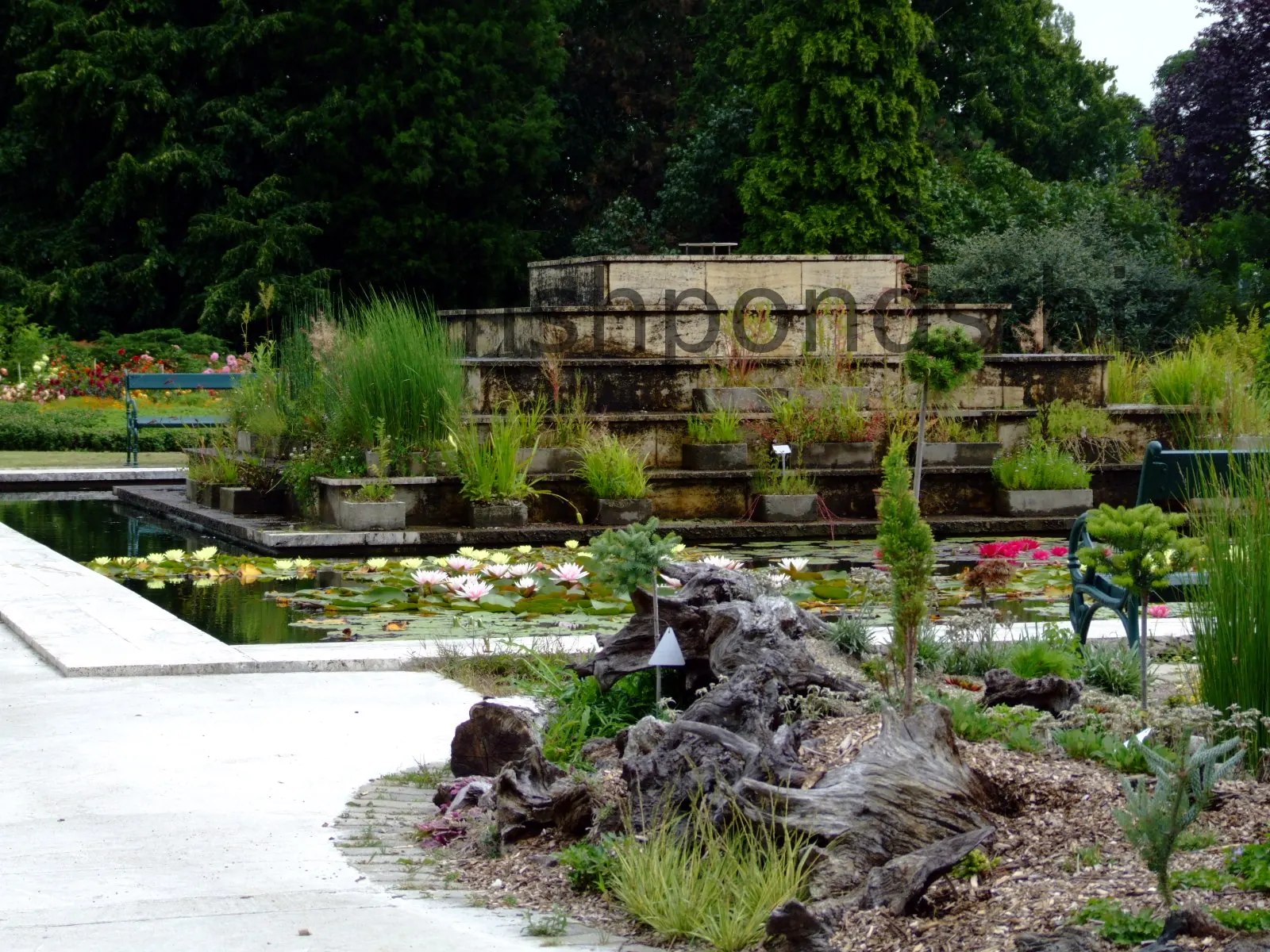
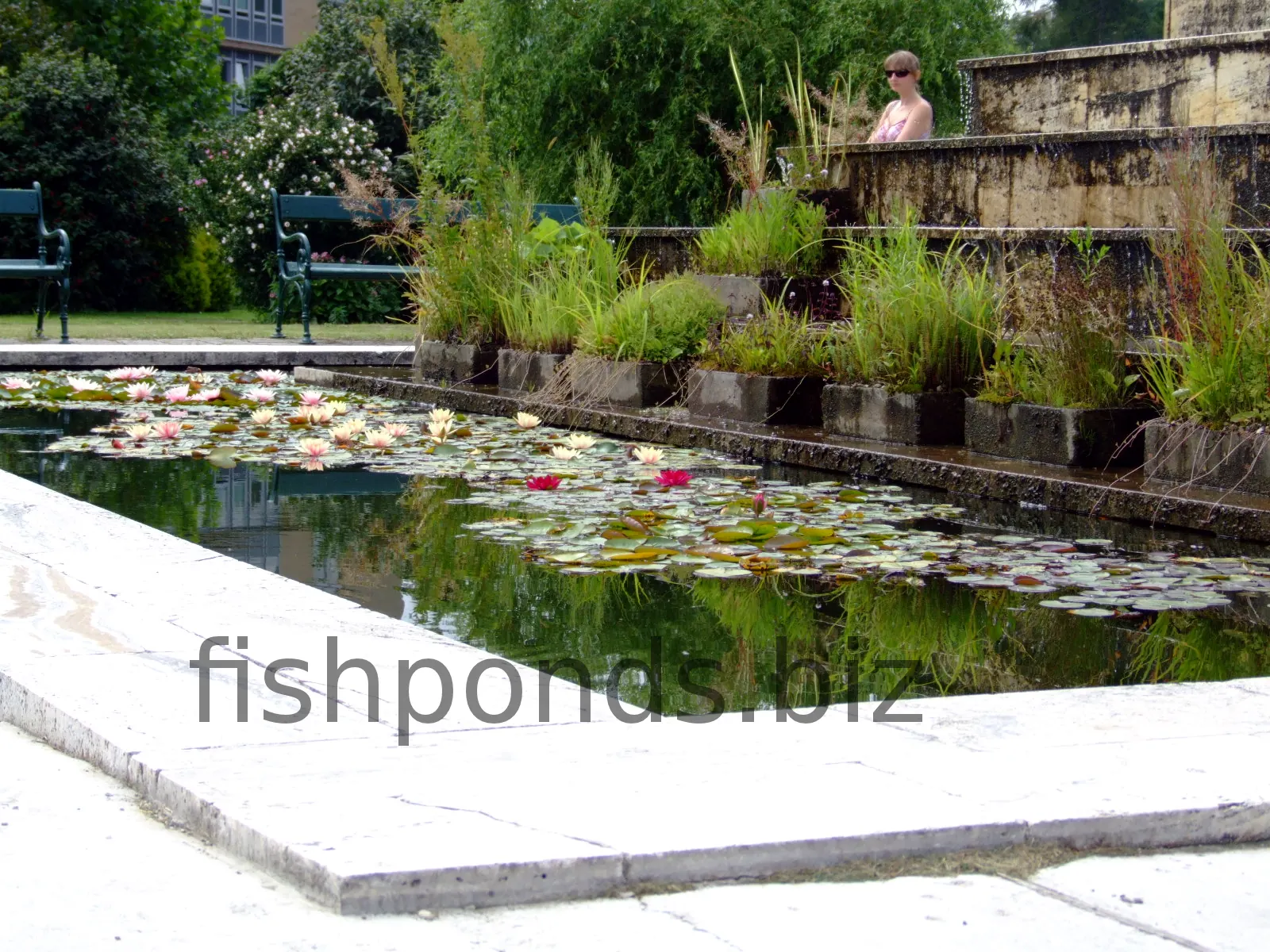
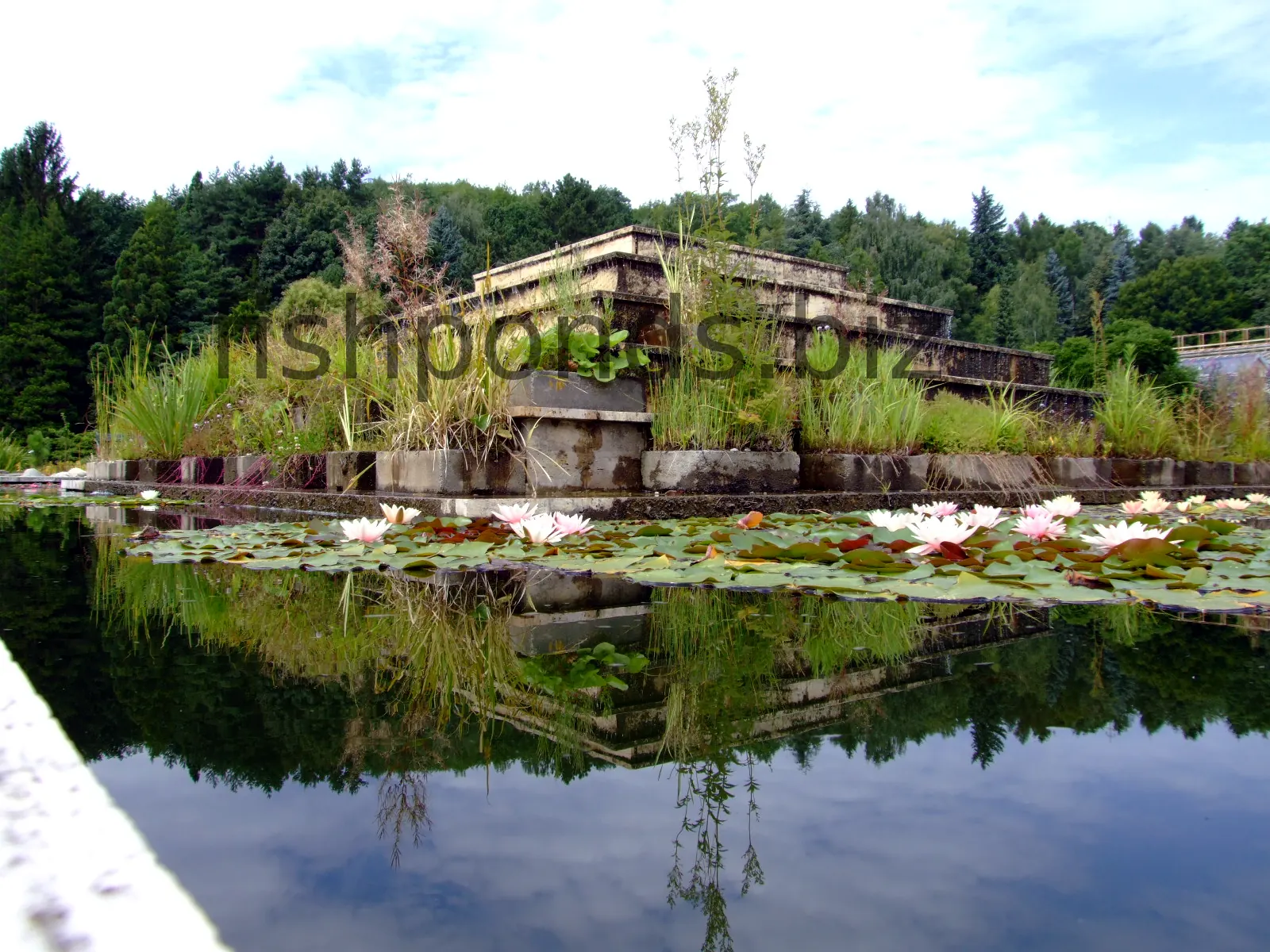
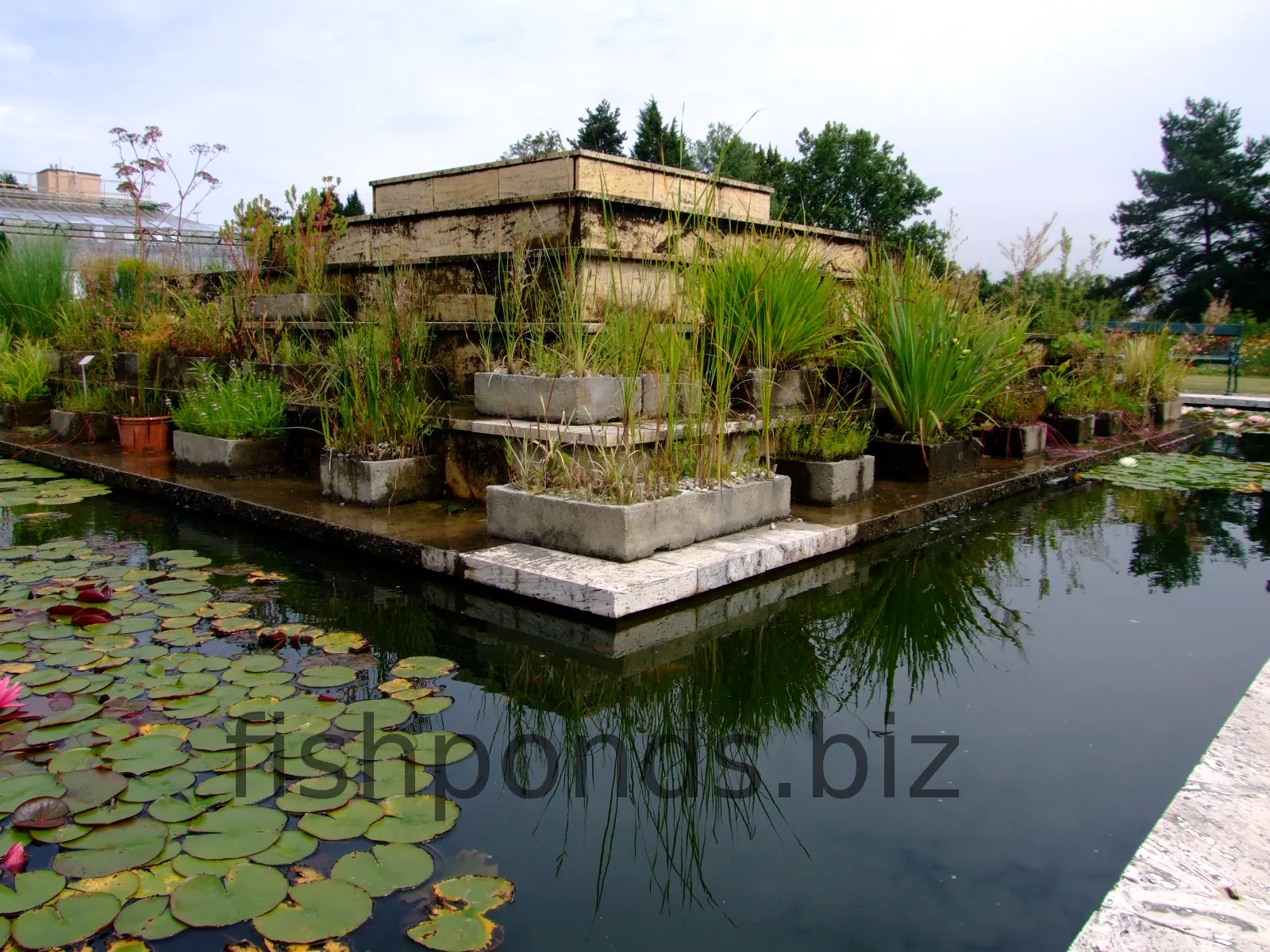
Straight-sided geometric ponds work particularly well in formal gardens and beside patios, walls or modern buildings.
They are also easy to represent accurately on a plan and can make good use of limited space.
Oval and rounded ponds
Rounded shapes soften the appearance of a pond and can work well in both formal and informal gardens.
Curved walls can also help avoid awkward corners where debris may accumulate, although good circulation still depends on the complete pond system.
Kidney-shaped and free-form ponds
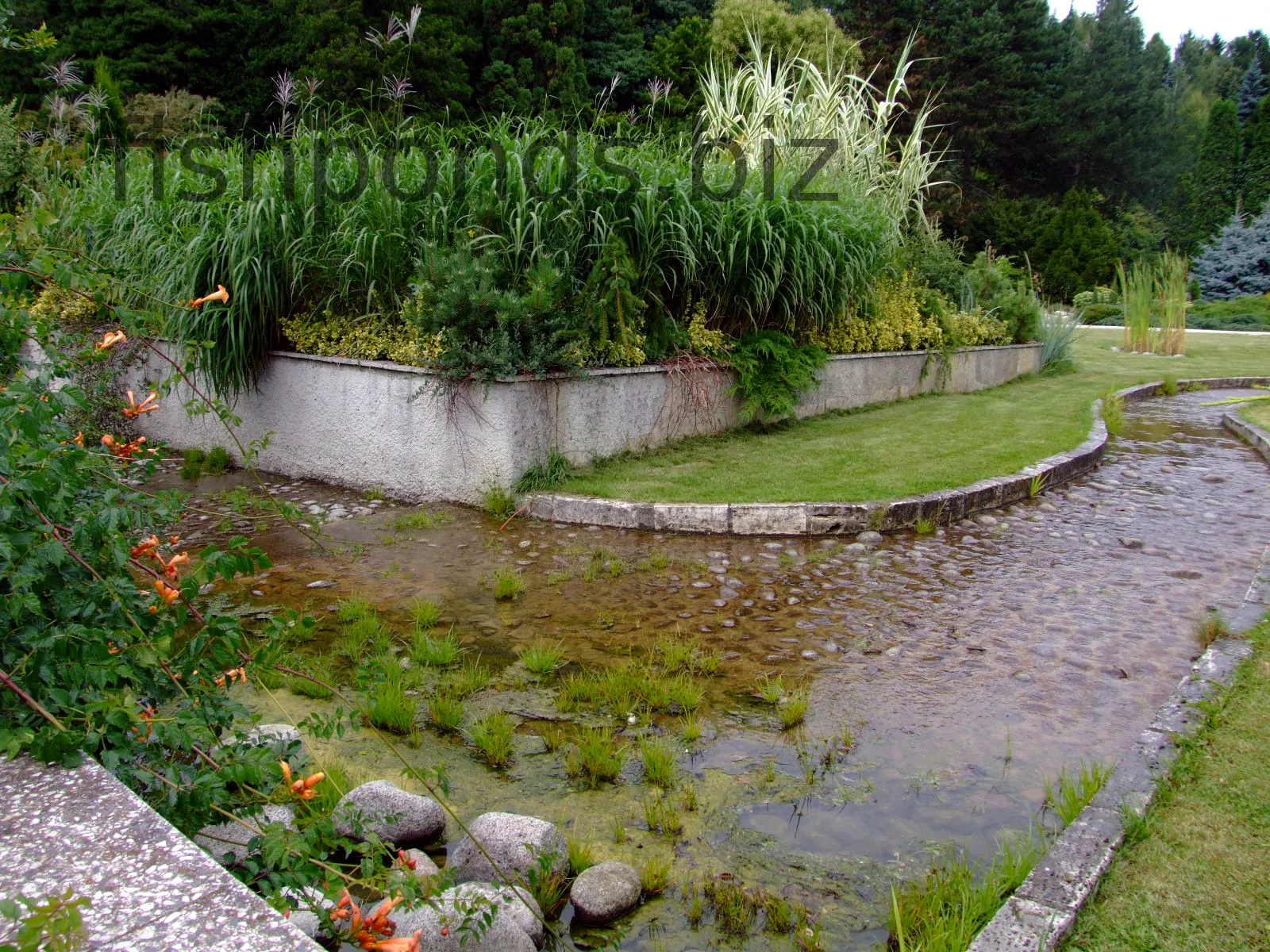
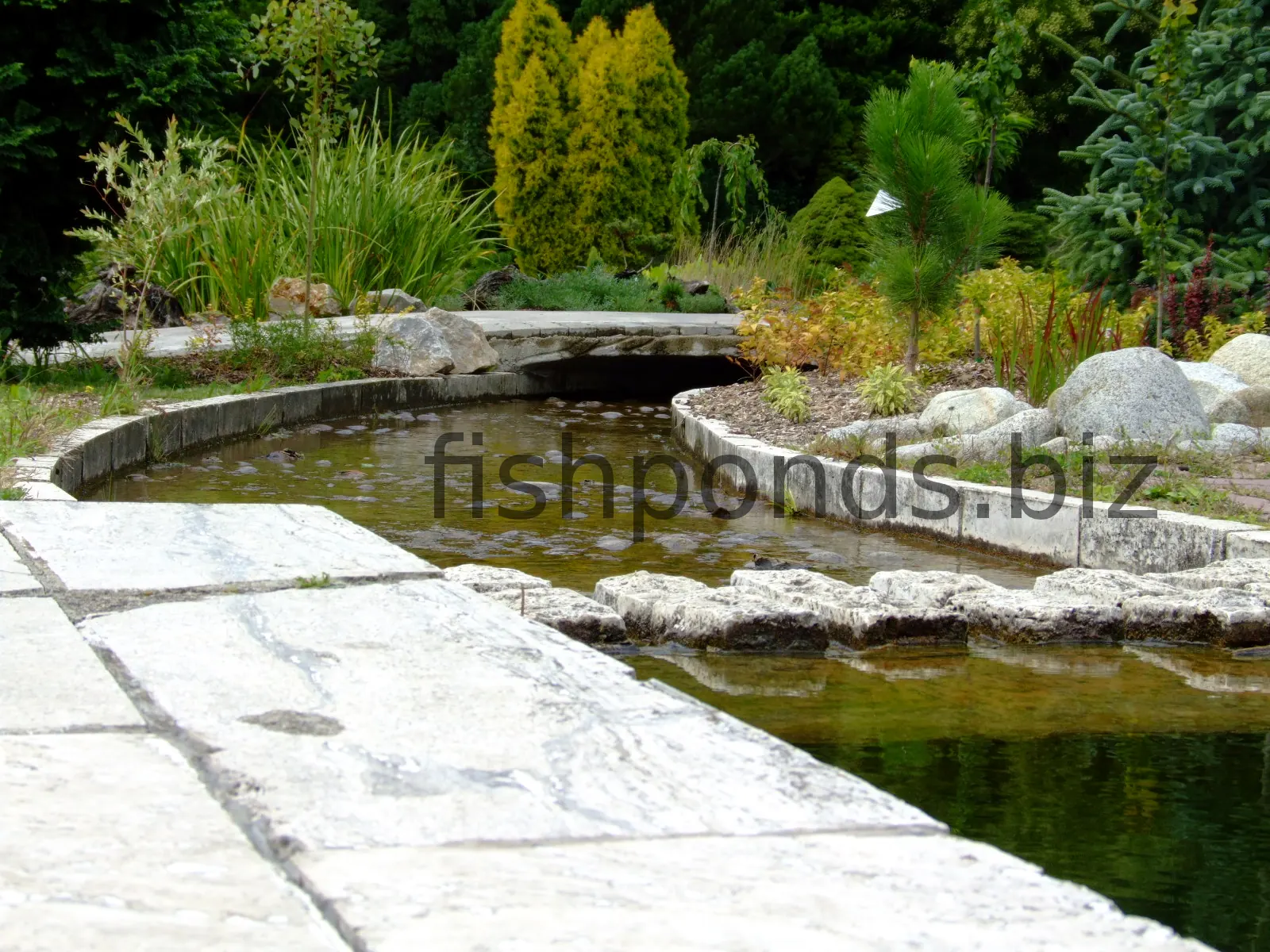
Irregular shapes are popular where the aim is to make the pond look more natural.
They can be particularly effective when combined with planting, rocks and gradual transitions into the surrounding landscape.
Avoid unnecessary complexity
A complicated outline with many narrow bays and sharp internal corners may look interesting on paper but can make liner installation, circulation and maintenance more difficult.
Use complexity where it improves the design rather than simply because it is possible.
Formal or natural-style pond?
Formal pond
- Geometric shape
- Defined edging
- Often larger areas of open water
- Works well beside patios and buildings
- Can be partially or fully raised
Natural-style pond
- Irregular outline
- Softer planted edges
- Greater emphasis on vegetation
- Can provide useful wildlife habitat
- Designed to blend into the garden
Design the pond around the fish
A fish pond should not be designed entirely from the edge looking inward. Consider what the pond will be like from the fish's point of view as well.
Fish need enough open water and volume to behave normally, and they should not be forced to spend their lives negotiating dense planting, ornaments or narrow channels.
The larger the fish and the greater the intended stocking level, the more important water volume, circulation and filtration become.
Plan depth before you start digging
Pond depth should be chosen according to the fish, climate and purpose of the pond rather than by applying one universal number to every design.
A planted ornamental pond may include several depth zones, while a dedicated koi pond often places much greater emphasis on deeper uninterrupted water and swimming space.
Also remember that a pond with sloping sides contains considerably less water than a vertical-sided pond of the same surface dimensions.
Useful pond depth zones
A pond does not necessarily need the same depth everywhere.
Shallow planting shelf
Useful for marginal plants and for creating a gradual transition between the pond and surrounding landscape.
Open swimming area
Provides uncluttered water for fish and forms the visual centre of many ornamental ponds.
Deeper water
Provides greater water volume and a more stable environment than a pond that is shallow throughout.
Plan filtration before the pond is built
One of the most common design mistakes is deciding where the filter will go only after the pond has already been excavated.
Before construction, decide where appropriate components will be positioned, including:
- pond pump;
- mechanical and biological filtration;
- skimmer if used;
- bottom drains if used;
- return outlets;
- UV clarifier where required;
- aeration;
- pipework;
- electrical supply.
This allows the pond shape and surrounding landscaping to accommodate the equipment rather than fighting against it later.
Filters and pumps need maintenance. Hiding them completely is useful only if you can still reach them without dismantling half the garden.
Leave enough working space to clean filters, remove pumps and inspect valves or pipework.
Think about water circulation
Water should be able to move through the pond and reach the filtration system without creating large stagnant areas.
Pond shape, pump location, returns, waterfalls, skimmers and drains all affect this circulation.
A beautiful shape that makes effective circulation unnecessarily difficult may not be a good design for a heavily stocked fish pond.
Natural-style fish pond design
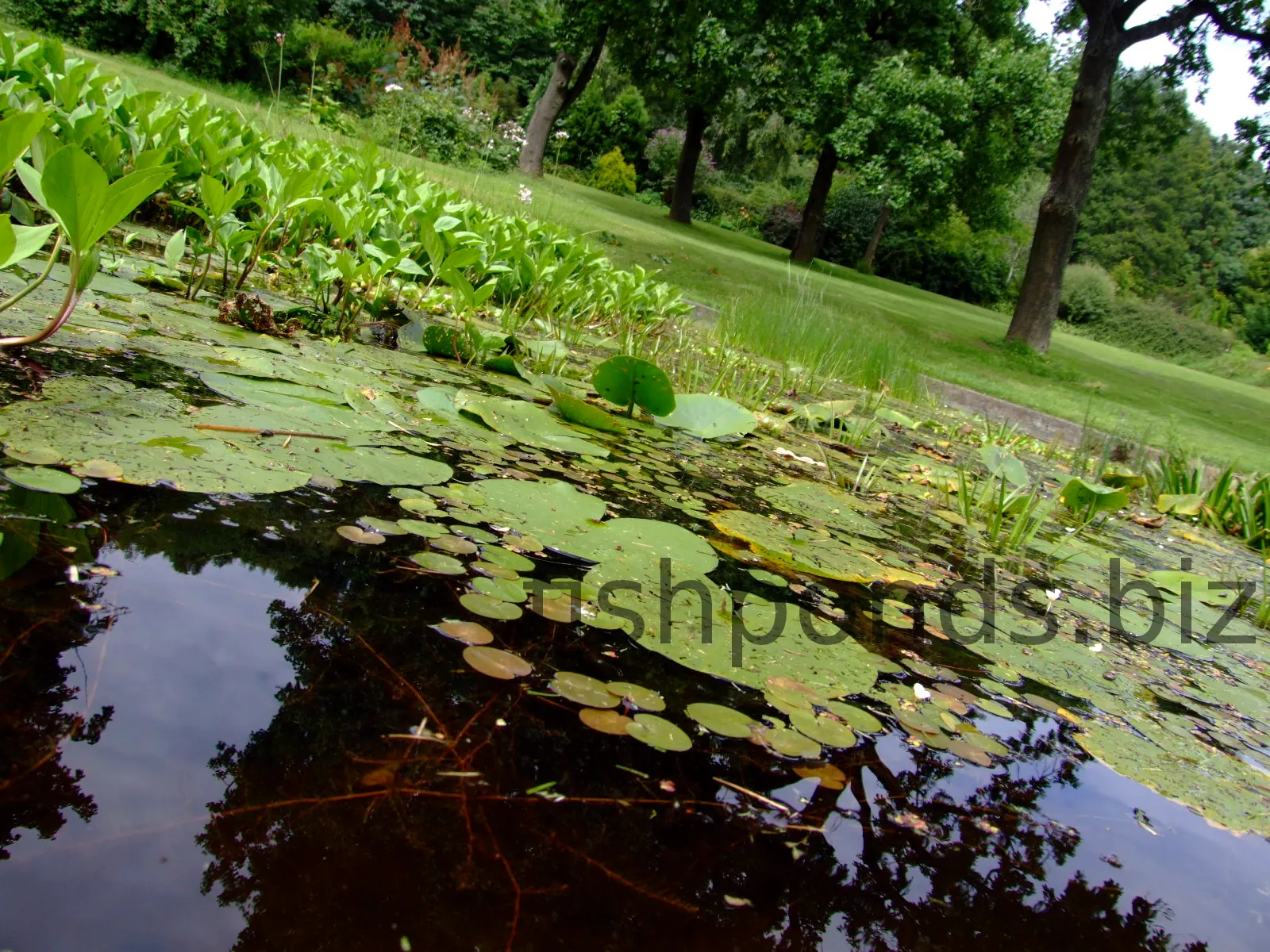
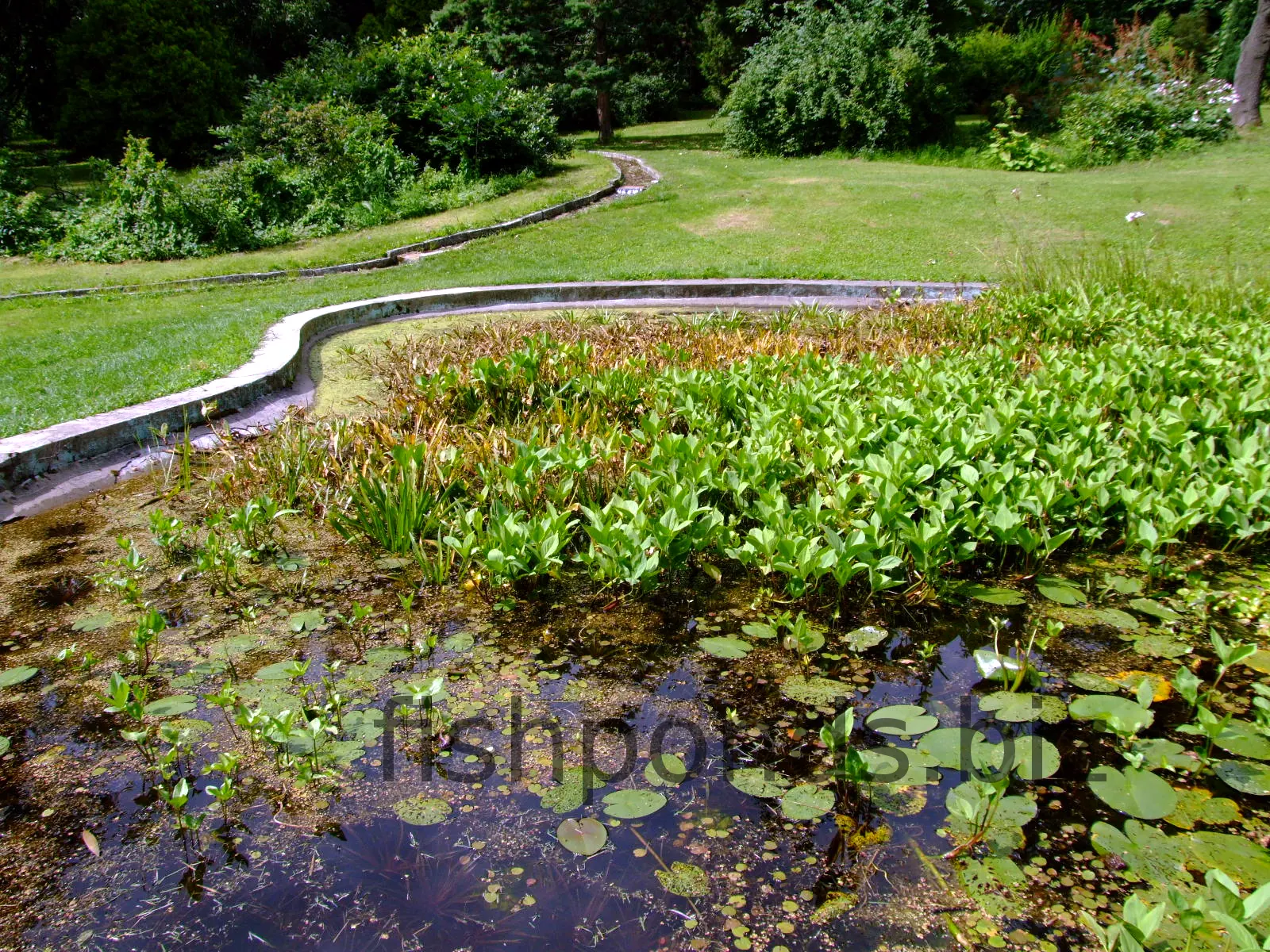
A natural-looking pond should appear to belong to the surrounding landscape rather than looking like a geometric hole that has been decorated afterwards.
Useful design principles include:
- an irregular but uncomplicated outline;
- planted margins;
- variation in water depth;
- rocks and plants that continue visually beyond the pond edge;
- areas of both open water and vegetation;
- an edge treatment that hides the construction method.
If fish are included, do not sacrifice their swimming space or water quality requirements merely to create a wild appearance.
Wildlife and fish ponds are not exactly the same thing
A wildlife pond and a pond designed primarily for ornamental fish can overlap, but their priorities are not identical.
Fish may eat eggs, larvae and other small aquatic organisms, while powerful filtration and highly manicured pond edges may reduce some of the habitat that wildlife uses.
If wildlife is the main goal, design for wildlife first rather than assuming that adding fish will always improve the pond.
Designing an ornamental goldfish pond
A general ornamental fish pond offers considerable freedom.
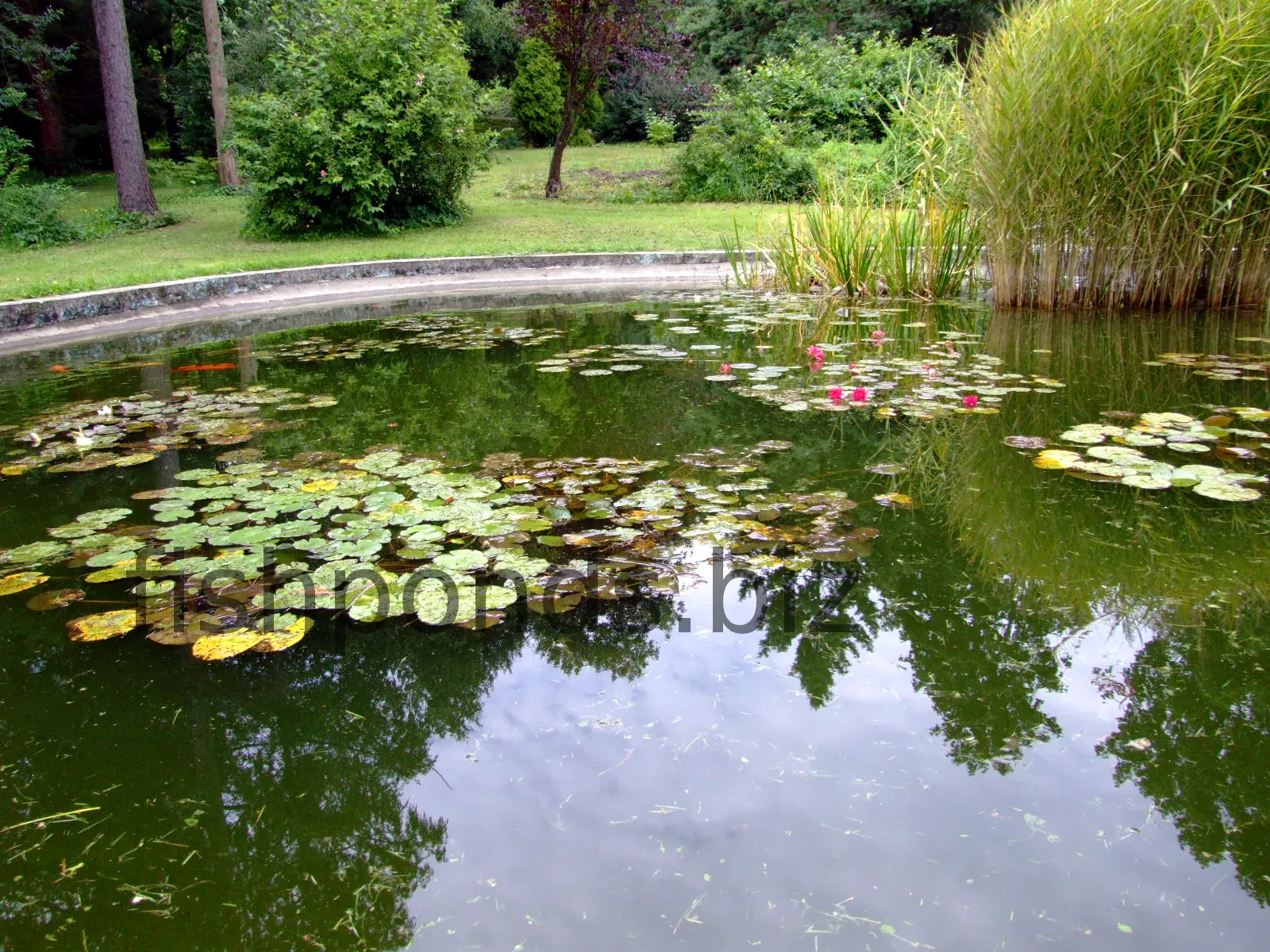
It can contain aquatic plants, open water, stones, waterfalls and fountains provided the finished pond still offers adequate volume, depth and water quality for its fish.
Goldfish ponds often benefit visually from a mixture of planted margins and open water rather than filling every available shelf with plants.
Designing a koi pond
Koi place greater demands on pond design because they become large fish and produce a substantial waste load.
A koi-oriented design normally gives priority to:
- large water volume;
- generous swimming space;
- effective mechanical and biological filtration;
- strong circulation;
- easy filter maintenance;
- safe, uncluttered pond interiors.
Bottom drains, skimmers and dedicated return systems may form part of the design, particularly in purpose-built koi ponds.
These components are much easier to incorporate before construction than to retrofit later.
Designing a small fish pond
A small pond needs just as much planning as a large one.
Limited space means that every feature occupies a greater proportion of the available water, so too many rocks, plant baskets or decorative objects can quickly make the pond cramped.
Keep the design simple:
- use one clear overall shape;
- avoid too many tiny shelves;
- keep useful open water;
- choose one main visual feature rather than several competing ones;
- leave access for cleaning and maintenance.
Fish pond landscaping ideas
The pond edge determines whether the water feature feels integrated into the garden or simply placed on top of it.
Common approaches include:
- natural stone;
- paving slabs;
- timber detailing where appropriate;
- turf brought close to the pond edge;
- dense planting that hides parts of the liner or structure;
- gravel and low planting around informal ponds.
Try to repeat materials already present elsewhere in the garden. A pond often looks more convincing when its edging relates to nearby paths, patios, walls or planting beds.
Create a viewing area
When designing the pond, decide where people will actually stop and look at it.
A bench, patio, path or seating area can influence where the most attractive side of the pond should be and where fountains, waterfalls or specimen plants will have the greatest visual impact.
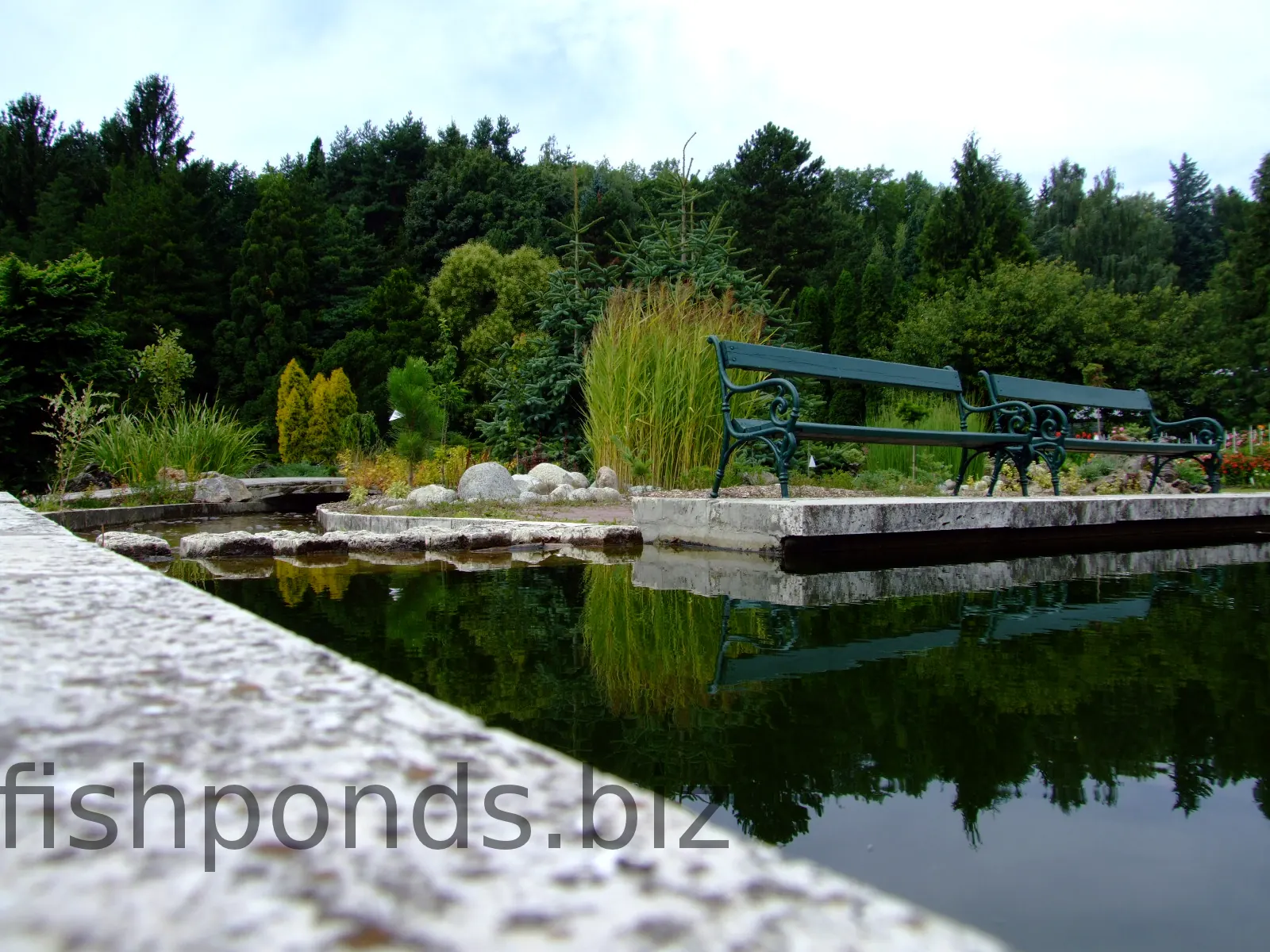
Also consider reflections. A pond viewed from a low seating position can look very different from the same pond viewed while standing beside it.
Use plants to connect the pond to the garden
Planting immediately outside the pond is often just as important as planting inside it.
Groups of moisture-loving or architectural plants around selected parts of the edge can soften hard construction lines and make the pond feel established.
Avoid surrounding every centimetre of the pond with tall vegetation. Leaving some open edges provides viewing and maintenance access.
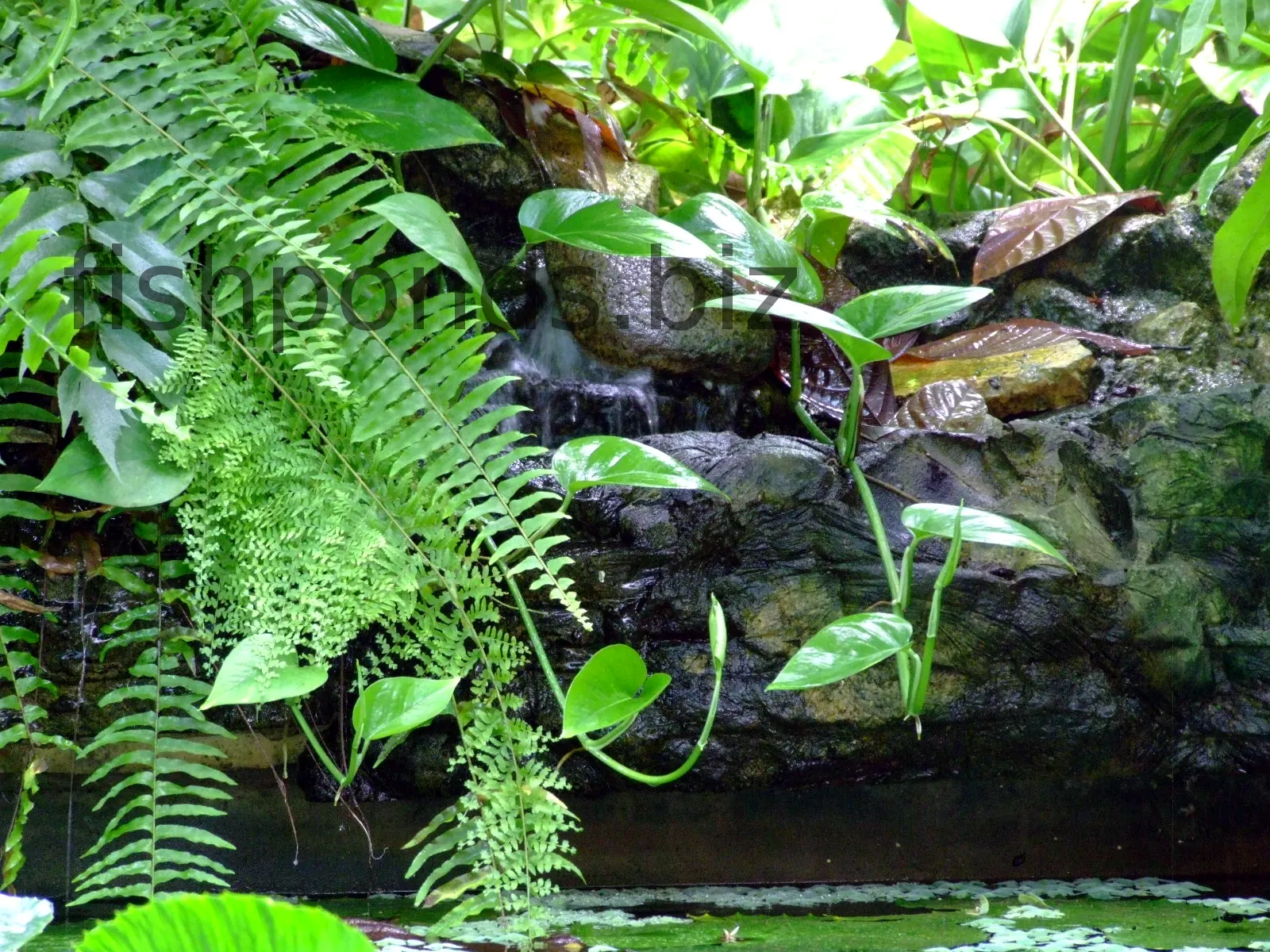
Adding a waterfall to the pond design
A waterfall can provide movement, sound and an obvious visual destination for the pond.
Plan it while designing the pond rather than placing an isolated pile of rocks at the edge afterwards.
Consider where the water appears to originate, how the rocks connect with the surrounding landscape and where the returning water enters the pond.
For more detail, see our guide to fish pond waterfalls.
Adding a fountain
Fountains work particularly well in formal or open-water pond designs.
Allow enough distance between the fountain and pond edge so that normal wind does not continually blow spray onto the surrounding ground.
For fountain types, pump considerations and fish safety, see our guide to fish pond fountains.
Raised fish pond designs
A pond does not have to finish at ground level.
Raised or partially raised ponds can:
- create a strong architectural feature;
- provide convenient seating-height edges;
- work well beside patios;
- reduce the amount of excavation required in some locations.
They also make the pond more visually dominant, so the wall material and proportions should suit the surrounding garden.
Plan the pond edge before construction
Do not leave edging as an afterthought.
The edge must hide or finish the construction method while remaining stable, safe and visually appropriate.
With flexible liners, make sure the liner edge remains properly terminated and protected rather than cutting it back before the final water level and edging have been confirmed.
Draw the pond layout before building
You do not need professional architectural software to create a useful pond plan.
A simple scaled drawing can show:
- overall length and width;
- pond shape;
- depth zones;
- plant shelves;
- filter location;
- pump and pipe routes;
- waterfalls or fountains;
- paths and viewing areas;
- nearby trees, walls and buildings.
It is much easier to move a filter ten centimetres on paper than after the pipework has been installed.
A simple fish pond design process
- Decide the pond's main purpose. Choose whether fish, koi, planting, wildlife or visual appearance is the primary goal.
- Choose the location. Consider views, sun, trees, runoff, electricity and maintenance access.
- Choose the approximate size and shape. Make sure the design fits naturally into the available garden space.
- Plan depth zones. Include the open-water and planting areas required by the intended pond.
- Plan filtration and circulation. Decide where equipment, pipework, drains and returns will go.
- Add landscaping and decorative features. Waterfalls, fountains, stones and planting should support the main design rather than dictate it.
- Review maintenance access. Make sure everything that will eventually need cleaning can be reached.
- Check the complete plan before digging. Changing the design now is vastly easier than changing a finished pond.
Four simple fish pond layout ideas
Small goldfish pond
Simple rounded or rectangular shape, moderate planting, one deeper area and plenty of open water.
Natural planted pond
Irregular outline, planted margins, shallow shelves and soft landscaping connecting the pond to its surroundings.
Formal rectangular pond
Clean geometric edges, open water, limited structured planting and a strong visual relationship with paving or architecture.
Koi-oriented pond
Large uninterrupted water volume with filtration, circulation and maintenance access treated as primary design requirements.
Common fish pond design mistakes
- Designing only for appearance. Fish, filtration, circulation and maintenance still have to work after the landscaping is finished.
- Making the shape unnecessarily complicated. Narrow bays and awkward corners can make construction and maintenance more difficult.
- Adding filtration after the pond is designed. Equipment and pipework should be incorporated from the start.
- Filling too much of the pond with decoration. Fish still need useful open swimming space.
- Ignoring maintenance access. A beautiful hidden filter is not useful if cleaning it requires dismantling the landscape.
- Allowing dirty surface runoff into the pond. The surrounding ground should not continually wash soil and nutrients into the water.
- Choosing a design before deciding what fish will live there. Different fish and stocking levels create different requirements.
- Leaving the pond edge until last. Edging is a major part of both the appearance and construction.
- Adding too many visual features. A waterfall, fountain, bridge, statue and ten different edging materials rarely improve the same small pond.
- Starting excavation without a plan. Even a simple drawing can reveal problems before they become expensive.
Fish pond design FAQs
What is the best shape for a fish pond?
There is no universally best shape. Simple rectangles suit formal gardens, while rounded and irregular shapes often work better in natural-style landscapes. Avoid unnecessary corners and narrow sections that complicate circulation or maintenance.
Where is the best place for a fish pond?
Choose a location that is visible and enjoyable but still has practical access for construction and maintenance. Consider sunlight, trees, runoff, electricity and surrounding paths before building.
Should a fish pond have different depths?
Many pond designs benefit from different depth zones, especially where marginal plants are used. The exact layout should depend on the fish, plants, climate and purpose of the pond.
Is a rectangular pond good for fish?
Yes. Fish do not require an irregular pond shape. A properly sized rectangular pond can provide excellent swimming space and can be particularly suitable for formal or koi-oriented designs.
How do I make a fish pond look natural?
Use an uncomplicated irregular shape, soften selected edges with planting, repeat materials found elsewhere in the garden and avoid making every feature look artificially symmetrical.
Should I plan the filter before digging the pond?
Yes. Decide where the filtration, pump, returns and pipework will go before construction. Retrofitting major pond equipment is usually more difficult than designing around it from the beginning.
Can I design a pond mainly for koi?
Yes. A koi-oriented pond normally prioritises large water volume, swimming space, filtration, circulation and practical maintenance over dense aquatic planting.
Are raised fish ponds a good idea?
They can be. Raised ponds work particularly well in formal gardens and beside patios and can reduce excavation. Their walls become a major visual feature, so materials and proportions need careful planning.
How should I design a small fish pond?
Keep the layout simple, retain useful open water and avoid filling the pond with too many shelves, ornaments or features. Small ponds benefit particularly from careful planning because every feature occupies a larger proportion of the available space.
Do I need a drawing before building a pond?
It is strongly recommended. Even a basic scaled sketch can help position depth zones, filters, pipework, waterfalls, planting and surrounding landscaping before construction begins.
Reader question
Good article. But can one have a concrete block industry on the same site where you set up your fish pond?
Yes, it may be possible to have a fish pond on the same site as a concrete block manufacturing area, but the two should be carefully separated.
Cement dust, concrete slurry, wash water and runoff from areas where cement or aggregates are handled should never be allowed to enter the pond. Cement-based materials can strongly affect water chemistry, and contaminated runoff may be harmful to fish and other aquatic life.
Ideally, position the pond away from the working and storage areas and design the surrounding ground and drainage so that rainwater from the concrete operation flows away from the pond. Dust control and a physical separation between the pond and the industrial activity are also advisable.
If the site cannot reliably prevent dust, cement-contaminated water or other industrial runoff from reaching the pond, I would choose a different location for the pond.